Splenda is not so splendid

Yet another reason I’m not a fan of Splenda…….corn.
What, you ask, do corn and Splenda have in common?  If you take a look at the back of a Splenda packet, you’ll find a very imporant word: Dextrose.

Dextrose is a sugar derived from corn.  The same plants that gives us high fructose corn syrup also produce dextrose.  Now, dextrose can also be derived from other things, like grapes, but much of the dextrose we eat comes from corn.

Why all the hype about corn?  What gives?  Corn continues to be a hot button because we are over-using it; the typical American approach: Something has a good aspect to it, so we exploit it and over-work it, and then wonder what went wrong.  Our food (including dairy, meats, legumes, grains, etc) is at least 25% corn-based, from the reading I did in both “Omnivores Dilemma” and “Fast Food Nation” recently.  The reason is that many of our lifestock eat corn, so we get the residual issues in our bodies.

Corn sensitivity, like gluten or dairy sensitivity, is on the rise.  Of course it is – when we over-consume something, our bodies get sensitive to it.  It’s like being poked in the same spot on your arm 1,000 times.  Sure, a poke every now and again isn’t so bad, but constant poking yields a bruise, dysfunction on the skin and sensory feedback and general irritation.  Same with food.  We over-eat something ,especially if that something is genetically modified (and you can be your bottom dollar Corn is genetically modified, especially nowadays).
The other reason artificial sweeteners don’t excite me is that they miss the point: we are addicted to sweet.  Wouldn’t you (who are also fellow addicts like me) agree that once you get the taste for sweet, it’s over?
Americans consume a lot of sugar, we all know that
What I think is under-represented is the genetic and biochemical drive to consume that sugar even when we know it is not good for us.  What would serve us better are foods/recipes/mindsets that help us put our sweet craving aside.

In Chinese medicine it is said that a sweet addiction is an addiction to “the sweetness of life”.  We want it to taste like honey all the time, and when it doesn’t, we go looking for the honey.

I can certainly see this in myself.  I’ve used sugar as a compadre to cope with the drama in my head for many years.  Without it, life still seems a little sour, and yet with it I am a slave to its effects.

I suppose the call to action here is to invite myself and others to look at the role sweet foods play and ask ourselves if that role is really suiting our life’s dreams?  And for the times when something sweet would be really appropriatae, why not make something real, good and of the earth?
For such an occasion, I have a recipe.  Maybe its weird to post a dessert recipe here, because I’m talking about abstaining from sugar, so this one is for the birthday party, the 4th of July picnic, or whatever else is a call to celebrate.

I have to thank Better Homes and Garden’s for the inspiration.  I was looking for a recipe for a birthday potluck at work and my new mag came to the door, offering a recipe that catapulted me into creative recipe creating mode.

Blueberry-lemon-coconut-pie (and low sugar too!)

1/2 cup virgin coconut oil
3/4 cup whole oats (you can blend them for 30 seconds for a finer flavor, if you’d like)
1/2 cup spelt flour
1/2 cup unsweetened coconut
2 tsp cinnamon and nutmeg, each
1/2 cup flaxmeal
1/4 cup sucanat

In a small saucepan, heat coconut oil over medium heat until melted and warmed (1-2 minutes).   In a med bowl, stir oats, flour, coconut, flax, spices, and sugar.  Stir in butter and mix.  Press into the bottom of a 10″ pie dish, or 13″x9″ pie dish.  Bake at 350 for 10 minutes.

Filling:

6 eggs (or 3 eggs + 4 whites)
1/2 cup spelt flour
1/2 cup fresh lemon juice
3/4 tsp baking powder
1/4 tsp nutmeg
1 tsp lime peel
2 cups blueberries (I warmed 2 cups of blueberries on the stove w/1 packet Stevia to bring out flavor prior to adding)
1/4 cup sucanat.

In a medium bowl combine eggs, sugar, 1/2 cup spelt flour, lemon juice, baking powder and nutmeg.  Beat for 2 min.  Stir in lime peel and berries.  Pour over crust.  Bake 30 minutes at 350.  Serve chilled after 2 hrs of refrigeration.

This one was a hit with all the co-workers, even those who don’t normally eat healthy.

I’m learning the power of having a well planned, special treat on occasion versus the daily consumption of “junk” sugar, which doesn’t actually make me feel good, and certainly doesn’t add anything to my health.

Blessings

R

More on the price of convenience: a NEAT perspective

Recently a fellow blogger, named Jeff, wrote this:

  1. The average long haul truck driver leads a sedentary life and stops at travel centers 5 times each day. Their diet is heavy on snacks and all-you-can-eat buffets. It should come as no surprise that 73% of professional truck drivers are overweight or obese, more than twice the national percentage. Truck drivers may “celebrate the cost savings” but their bodies are clearly paying a greater price.

Yowza!!  5 times/day…….that is crazy.  This topic reminded me of something I was recently reading in a Mayo Clinic newsletter.  It was a discussion on the epidemic of obesity due to lack of physical activity.  Truck drivers are certainly examples of a population who both move very little AND eat very calorie-dense foods.

So, I did a little research on something called NEAT:
you can check it out at this Mayo clinic link.

NEAT: NON-EXERCISE ACTIVITY THERMOGENESIS

Introduction
Looking out over this crowded coffee bar, I see a 40-year-old man reading a newspaper. He is stationary. He sits next to a 30-year-old woman. She can barely sit still. She gets up and curves between the tightly squeezed tables, just to get a napkin and then gesticulates wildly as she talks on her cell phone. He has still not moved. He thinks now of his three-year-old daughter at home; “she just never stops” he thinks. He smiles to himself and scratches his nose. She gesticulates further as she tells a friend of a rat she saw scuttling rapidly on the subway rails. A taxi drives by. The driver immigrated from an agricultural community in the Ivory Coast. Birds soar high over-head. All these living beings exhibit spontaneous physical activity or, Non-exercise Activity Thermogenesis (NEAT).

Human Energy Expenditure (and semantics)
Even lean individuals store at least two to three months of their energy needs in adipose tissue whereas obese persons can carry a year’s worth of their energy needs. It is the cumulative impact of energy imbalance over months and years that results in the development of obesity or undernutrition.

There are three principal components of human energy expenditure (EE), basal metabolic rate (BMR), thermic effect of food (TEF) and activity thermogenesis. There are also other small components of EE that may contribute to the whole, such as the energetic costs of medications and emotion.

BMR is the energy expended when an individual is laying at complete rest, in the morning, after sleep, in the postabsorptive state. In individuals with sedentary occupations BMR accounts for approximately 60 percent of total daily EE. Three-quarter’s of the variability in BMR is predicted by lean body mass within and across species. TEF is the increase in EE associated with the digestion, absorption, and storage of food and accounts for approximately 10-15 percent of total daily EE.

Activity Thermogenesis has two constituents, exercise-related activity thermogenesis and Non-exercise Activity Thermogenesis (NEAT). For the vast majority of dwellers in the U.S., exercise activity thermogenesis is negligible. NEAT, even in avid exercisers, is the predominant constituent of activity thermogenesis and is the EE associated with all the activities we undertake as vibrant, independent beings. NEAT has an enormous variety of constituents including occupation, leisure and fidgeting. Because of this, NEAT is challenging to study and its role in human energy balance has been difficult to define.

Non-exercise Activity Thermogenesis (NEAT)
NEAT is likely to contribute substantially to the inter- and intra-personal variability in EE. Argue thus; if three-quarters of the variance of BMR is accounted for by variance in lean body mass and, TEF represents 10-15 percent of total EE, then the majority of the variance in total EE that occurs independent of body weight must be accounted for by NEAT. Evidence supports this. NEAT is highly variable and ranges from ~ 15 percent of total daily EE in very sedentary individuals to >50 percent in highly active persons . Even minor changes in physical activity throughout the day can increase daily EE by 20 percent. NEAT is impacted by environment, but is also under biological control .

NEAT and environment
There are many environmental cues that impact NEAT. Broadly, they can be divided into occupational and non-occupational components.

NEAT and occupation
Matched individuals with highly active ambulatory jobs can have NEAT values of 1000 kcal/day greater than sedentary peers. In areas of nutritional need, this has implications for starvation-threatened individuals. In affluent countries, industrialized can convert high-NEAT jobs to lower-NEAT jobs and this has been associated with increased obesity rates.

Non-occupation NEAT

  • Dish washers
  • Cars
  • Remotes
  • Lawnmowers
  • Drive-through
  • Game-boy
  • Elevators
  • Snow blowers

Leisure-time sedentariness has resulted from the availability and volitional use of pervasive mechanization. When the energetic cost of non-work mechanization is estimated experimentally it approximates to, 100-200 kcal/day; a caloric deficit that potentially could account for the entire obesity epidemic.


NEAT and physiology
With experimental overfeeding in humans, NEAT increases. Those who increased their NEAT the most with overfeeding gained the least fat. This suggests that along with self-evident societal slothfulness, NEAT is biologically modulated. Animal data support this. There appear to be central mediators of NEAT. For example, microinjections of orexins into hypothalamic nuclei increase NEAT whereas antagonists decrease it. There may be humoral mediators as experimental hyperthyroidism is associated with increased NEAT. There also be genetic mechanism at play; during overfeeding twinness in part predicts fat gain. Also NEAT is specific for different genetic strains of mice.
Where to from here?

Mechanism: by understanding the neuromodulators and non-central mediators of NEAT; its biological function will become clear.

Physiology: What are the key components of NEAT? What is the role of NEAT in aging, children, gender, and race? How does positive and negative affect NEAT and its components?

Pathology: What is the role of NEAT in obesity and eating disorders?

Intervention: Targeted, evaluated interventions from person to population.

Having read this abstract, please get up and take and short walk down the corridor (or similar). Repeat for each abstract you read. Please let me know how it went.

eating off-white in a “white” world…. (quinoa recipe included)

They say you can’t go home again……and I think they are correct.

This weekend my husband and I went to Northern CA to check out his new grad school (UC Davis) and visit family.  Food issues have always been a family affair for me.  Dad was overweight and had a stroke in 1995 and mom shared my love of cake frosting and baked goods most of my childhood.  I’d say to some degree we all had an eating disorder.  Never was there left-over ice cream or desserts in my home, no matter how large a package was purchased.  I simply thought it was normal.

So here I am, with my high maintenance diet, going home.  I know where all the treats hide: chocolate chips in the outside freezer, homemade biscotti in the spare bedroom, ice cream in the kitchen and whatever was baked for the weekend’s bbq is probably resting in the laundryroom.  Yes, I come from a long line of food hiders.  Either because the family would eat all of the goodies, or because ants would find their way into the cupboards, food was always kept anywhere BUT the kitchen.  There were stashes everywhere, which meant that I adopted a pattern of ‘sneaking’ from a young age.

For the most part I faired well.  My mom tries to supply me with healthy options, but unfortunately her Splenda-baked lemon cheesecake just did not work out (no dairy and no Splenda for me).  She also lovingly made a HUGE tray of lasagna for everybody to eat….well, except me, as I best not have dairy or white flour.  Nothing like watching others eat homemade lasagna while you chomp down on a green salad with chicken to make you want to devour a whole tray by yourself.

So what did I end up doing…..”sneaking”, of course!!!  I dipped my hand into the Ghirdhelli chocolate chips several times when I was near the outside freezer. I could feel the tension in my stomach and I did not enjoy them at all.  “so this is what I was like growing up…”, I thought to myself.  It was all about getting what I was NOT supposed to have.

The good side of ugly:  compared with past visits, I did relatively well at staying away from the white stuff.  I declined an offer for Starbuck’s drinks when everbody else was slurping down latte’s.  I did not eat late at night when I arrived on Thursday evening, despite a growling stomach.  Choices I make past 8pm are never in my favor.   I even resisted the peanut butter, cheesecake, cheese and ice cream.  I did have a homemade biscotti, and damn was it good!

Other off-white survival tips I use:

  • Start every day with warm lemon water.  This helps keep the GI track a flowin’.   Lemon water also kills a craving, especially if you add tons of lemon.
  • Distract myself when food becomes tempting and I’m not hungry.  My 4-yr old nephew was a great distraction, and he was up for a little fun anytime.
  • Make a dish of my own for family picnics, etc.  I chose quinoa date salad (recipe below) and tabouleh (from Near East).
  • Tell your family about your food limitations. I couldn’t be chowing on peanut butter because everybody knew that it wasn’t a great food choice for me.  I was rigorously honest so I could keep myself healthy.
  • Become your own observer.  I enjoyed watching myself get into ‘sneaky’ eating mode and seeing how I felt, thought and acted. It really was like Jr. High again.  Consequently, Jr. High is when I started obsessing on sugar for the sake of control/rebellion/pleasure.

Quinoa date salad

Serves 4
3/4 cup quinoa, not soaked
1.5 cups water
2 tsp vanilla
2 tsp each: cinnamon, ginger, cloves
1/2 tsp salt
1/2 cup chopped almonds
3/4 cup chopped dates

Add quinoa and water to a medium saucepan.  Bring to a rolling boil and then simmer covered until quinoa absorbs the liquid.  Just after the boil add vanilla, salt, and spices.    Chop the dates and almonds finely.  Add to quinoa 2-3 minutes before cooking is complete.  Serve warm or cold.

Nutrition:The price of convenience

Today I stopped into a Pilot gas station/convenience store to fill up. I decided to take a mosey inside and see what was going on, as the place on I-5 Southbound in the Willamette Valley is always hoppin’. If you don’t know, Pilot “travel centers” offer gas, convenience stores, and usually a restaurant, such as Subway and Taco Bell in this instance.

Here is what I saw: When you walk in, one of the first things you see is a cooler with mixed green salads, sandwiches and dessert parfaits for 2/$5. Then its the coffee bar/soda bar, which takes up approximately 20-25% of the total store space. There is even a fruit stand where apples, oranges and bananas are 2/$1 – not too shabby.

However, its easy to miss these healthy options because 75% of the store is dedicated to utter garbage. Just look at the monthly specials for Pilot LLC, and you can clearly see the focus is on garbage eating. Most of the people in line with me either had candy bars + soda or the 2 chili-dog special, or a 44 oz soda. Most of the people were 20 – 200 lbs overweight. I felt like an oddball being regular sized.

But, let’s break it down a little. I know that junk food, especially “value priced” appeals to the traveller in need of a little grub and little time. But is it really that inexpensive?
For instance, the king sized candybars (Kit kat, Snickers, etc) were 2/$2. What do you get for that $2, when compared to the salad at $2.50/piece.

Calorically: $2 gets you the caloric value of 2 king-sized candy bars. There are 440 Kcal in the 1.94 oz, which equals (for two): 880 kcal for $2 and 4oz of “food”. That is 220 Kcal/oz of “food”, and 440 Kcal/$1 of “food”.

By contrast, the salad, I’d guestimate at about 100 Kcal without dressing, and 250 with dressing. The size is likely 6-8 oz, possibly more. Let’s say 7 oz/ to be moderate.
Therefore, you get 250 Kcal for $2.50, which is 100 Kcal/dollar. You also get only about 38 Kcal/oz of food.
To compare, the better financial “value” is in the candy bar, at 440 Kcal/$1, versus 100 Kcal/$1 with the salad.

Comparing cost per ounce yields a different result. The candy bar is $.50/oz, whereas, the salad is about $.38/oz, which is a better deal.

Let’s look at the health of it: Do we even need to do any math? The salad will yield much better health and in all likelyhood help keep you “fuller” longer because it is real food being digested by your organs, versus sugary junk food that sends a message to your brain for more, more, more!

Yet, in the line I saw, not one person had a salad, despite the better deal in both the health and the cost per oz perspective. We are all trying to save money and improve our health, right? So why do candy bars and chili dogs win out?

Maybe this will help clear things up: Check out this monthly pilot ad: Notice a theme with what is on sale?

current_flyer

Because marketing shows us that “snickers really satisfies” and “gimme a break” from my hard day with a Kit Kat bar. Sexy models chow down and our subconscious mind can’t turn it off. We want a bite of what they are selling. We all feel like we deserve a ‘treat’ for simply living life. I totally fall prey to that. I’ll think about my hard day and how “good” I was, and suddenly I’m pulling up to those same convenience stores or to a cafe for my liquid pleasure: junky hot chocolate. No joking: one of the apects that keeps me coming back to the black juice is the cost value (ust $.89 – $.99 at a convenience store) and the fact that I can get more volume out of my sugary treat with a liquid than with a solid. I get 12-16 oz for the caloric “price” of a regular sized candy bar (esp since I cut the hot chocolate with decaf coffee or water to cut down on sugar). But somewhere in my subconscious mind the trick that working hard = needing sugar certainly stuck. For me its hot chocolate, maybe for you its chips or nachos or soda, or whatever. Notice that fruits and veggies do not have a marketing campaign? The “5 a day” campaign to eat more fruits/veggies has a budget of 5 million/year nationally, whereas the pepsi corporation alone spends $2 billion/year on marketing……gee, I wonder why we pass up the fruit stand at Pilot and head for the soda fountain. And did you check out the specials this month at Pilot? Buy a gigantic soda and get a Kit kat for only $.24…..what a deal, that is added value – even though to our body less is better. We seem to shop and eat from our pocketbook over our stomach and digestion. More food for less simply = unhealthy people, the body does not celebrate the cost savings like the mind does.

Here’s my suggestion when you travel: pack your own snacks/lunch or find a grocery store with a deli and produce section when you are passing through a town. The food is fresher, cheaper, and offers more variety than a gas station anyway. Seriously, if we want for change on a cultural level, we must be willing to go the extra mile (literally, in this case) to get our health needs met and express them as a priority.

That’s what I think today…but maybe I’m just cranky – I am on day 6 of a liver/colon detox…. 🙂

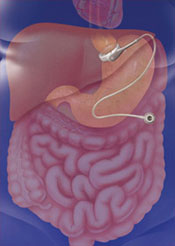
Why I’m not a fan of Lapband

I realize this post may upset a few people, in particular those with Lapband. So, let me just say from the get-go that the reasons for my dislike have NOTHING to do with the the individuals getting the surgery. I have several clients/coworkers with Lapband – all of them wanting for a better life and better health.

I did a little lookey-loo on the Lapband website. Just as I thought, the “nutrition” information was completely inadequate and misleading. In my opinion, any weight loss program that requires you to have up to 6-weeks of liquid/baby-food consistency sustainence AND THEN suggest things like skim milk, sugar-free Popsicles and jello as “healing” is ridiculous and not in alignment with body wellness. This can really mess with a metabolism that is already stressed from years of yo-yo dieting, poor nutrition, stress, ill health, etc.

Whether the body is getting only 800 calories/day or more, if the calories are not quality, the body is going to be stressed. There were several aspects to the Lapband diet which reflect that very conventional thinking that goes with the medical model promoting this surgery . Its all about calories, calories, calories. I have read a few Lapband blogs and see individuals struggling with calorie counting, watching the scale, and wondering when the changes will occur.

When will we wake up and realize that the issue is both emotional/cultural and nutritional. Why not educate people about the importance of healing the body with nourishing soups, no processed foods, and emotional healing post- surgery. Even beyond just giving facts, coaching people and supporting a co-creative effort between those who need support and those who can offer it should be standard with any weight loss program. I feel like the scheme of Lapband is aimed at filling a need/void from individuals who feel desperate and scared about their ability to lose weight. There is not enough support or good information. Its misleading. Howe can margerine (which is mentioned on the dietary recommendations post-Lapband) be a part of a new nutrition plan? Margerine kills people, or at least hampers their health.

I get it that the need is for weight loss, and that comes with certain lifestyle changes, the first of which should be a switch to whole foods, nutritions foods, and nothing more. That is the way. Diet soda, jello and sugar-free foods will not yield long-term success any more than high-calorie junk foods because THEY ARE JUNK FOOD. I was glad to see some language around eating quality foods for the nutrition, but the other contradictions were just too blatant.

I also wonder about the emotional/cultural issues that those seeking Lapband will still have to face. What is going to make that person refrain from going to the food when they are stressed, bored, scared or whatever. Its not like that surgery, or any other, fixes the emotional issues. Is there support for that built into the Lapband promise? I did not see anything of the sort, but I could be wrong.

If anybody out there has had Lapband and wants to comment I’d love to hear from you. I just get so mad because the underlying issues around food are not going to be solved with Lapband, as they go deeper than any surgery and have so much to do with our culture and individual relationship with food.

Okay, off the soapbox!

Silly me, I forgot that I have Candida

I was doing some paperwork “purging” and came across the lab results from all my testing I had done last year.  The testing came about because I was always feeling run down, had chronic constipation despite a high veggie/fiber diet, had voracious sugar cravings, and got sick all the time.  Amongst other issues the test results were loud and clear: Candida.

To make it short, Candida Albicans is a yeast that lives in the body.  It is the yeast responsible for “oral thrush” in HIV and cancer patients, and yeast infections in women.  Normally we have some in our gut.  When it gets out of control, it often creates major upsets in the GI function because it messes with the eco-system of your intestines.

It also craves sugar, its primary food source.  That is what screams at me to have some high-sugar fruit after a nice protein/veggie meal.  That is was whispers in my ear that a stop for hot chocolate “just this once” is a good idea.  That is the name of the voice which tells me to put an extra 7 teaspoons of agave in my tea.  Its ridiculous.

When I was diagnosed, my diet changed dramatically and for a while I was on the straight  and narrow.  My digestion improved and I felt good again.  lately, I haven’t been so dilligent.

Getting rid of candida is serious business: No high sugar fruits, no fruit alone, gluten-free grains oil, and LOTS of damn green veggies.  GoodNESS you have to eat a lot of green veggies.  I think I rebelled against the strictness and started enjoying things like dates and agave nectar and raisins.  Harmless to the ‘normal’ person, but I am hardly normal.

So I’m glad I found those results.  They humbled me again to realize that I eat for health, and not for my ego.  My body is pleading with me for balance, so its important for me to honor that plea.  The voice of the Candida is very tricky and easily mistaken for truth.

One thing I do when I’m  trying to cleanse my body of sugar craving is this:

1 cup of warm but not boiling water
Juice of 1/4 lemon
1-2 tsp of Bragg’s Apple cider vinegar

Mix and enjoy.  Its not tasty, but it cleans the GI tract and Candida hates it.  Score 1 for me and none for the Candida.  In fact, I’m drinking it right now and feeling  grateful that I know what my body needs…..now to only do it everyday……

Part III of sugar and stress to come.  But this is like an add-on to that topic, as Candida is certainly triggered by stress.

Sugar and stress, part I

So I’ve decided to do a little piece on sugar and stress, since it is SUCH a big aspect of my life and I see a lot of the effects of s&s everyday with myself and others. One benefit of having this affliction AND being a nutritional counselor is that I get to experience the impact of food and mood or many levels.

I’m gonna do this in 3 parts because I have a lot to say about this topic, and I think its worthy of a few posts.

Here’s where I’m going to start: WHY do I emotionally (people) crave sugar when I am stressed?

When I was young , the only thing I ever wanted was sugar, sugar, sugar. I obsessed over Halloween candy. I was glued to mom’s side when she was baking, so that I could score some free licks off a spoon or spatula. I always voted for “The Sizzler” when we were picking restaurants, exclusively for the strawberries and whipped cream at the salad bar. I was a junkie.

How did this all begin? First off, did you know that sugar is the first taste we develop? Mamma’s milk is sweet. We are held when we are fed. We feel safe. It goes on and on. Sometimes new mom’s and dad’s are told to bring sugar water to the doctor’s office when their baby gets an immunization, to help calm the pain. Sugar numbs us out. It makes us high. Physically, we do not need sugar to survive. We need carbs, but not necessarily simple sugars. We might then speculate that some of us are not so equipped to handle the impact of sugar. More on that in post #2.

For as long as I can remember, sugar has been a best friend to me. It is always there, in so many shapes, colors, sizes and textures. Its cheap, its socially acceptable, and it makes me feel SOOOOOOOOOOOO good….or does it? I went years harmoniously co-existing on this continuous sugar buzz without a hitch. I bragged about the fact that I could eat a pound of red vines while grocery shopping and not gain any weight. I think I kind of liked being the candy girl. It had a certain charm. My ego devoured the attention I got over sugar. “How cool is this?” I would think to myself. Turns out, not so cool.

But, like all good addictions, it catches up. It turns out that my physical and mental body don’t like being fueled by fructose and glucose 24/7 and that as I get older, my tolerance for sweet is much less, yet my attachment to it is much greater.

The past couple days I’ve been wanting for sweet because I am afraid of change. What? How do sugar and change relate? Well, when you are trying to heal the body-mind from something that was like an old friend (sugar) in your life, and then new variables (like possibly moving to California, and making major life changes) pop up, it sends me running back to mamma’s arms: AKA hot chocolate, oatmeal raisin cookies, or anything warm and sweet.

This desire to soothe is so deeply imprinted in me, and others (I think?!), that it almost seems like the right thing to do . My brain is so good at taking the path of least resistance that I trick myself into believing that I actually need sugar to survive. When uncertainty triggers feeling of aloneness, I need security. It feels deeply carnal, like a survival instinct. My emotional body actually thinks that I will not survive without it.

In the past few years, I’ve done a lot of soul searching and book study about this crazy, wacky phenomenon of sugar-stress. Here’s what I know:

  • Sweet is the first taste we experience, and nearly all people find “sweet” palatable. Sweet includes breads, pastas, fruits and even meats, such as red meat or lamb.
  • The average American consumes 140 lb/ year of sugar in some form. That is 44tsp/day. That means we pretty much get it all the time, so it becomes a major physical and psychological habit.
  • Most kid’s can identify brands like “McDonalds”, “Starbucks”, or some sugar cereal characters before they can actually read. When our sub-conscious mind is wide open, we are bombarded with messages that these companies will provide us with fun, friendship, love and excitement if we just eat what they are peddling.
  • As a kid many of us develop the association of sweets with reward, soothing our pain, celebrating and drawing attention to ourselves (ever have mom bring in cupcakes on your b-day? Didn’t you just feel like the cool kid at school, even if just for that day?)
  • When white sugar was first developed, European conquerers used it to over-power the people they were invading. They claimed that it made wise, motivated men “stupid and lazy” (from the book Sugar Blues).
  • Sugar depresses the nervous system. If you’re a nervous nancy, like I am, you want to stop those neurotic thoughts. What a better way than some cookies and milk, or a piece of favorite cake, or some candy, or whatever…..

ARE YOU EMOTIONALLY ADDICTED TO SUGAR?

  • Do you find yourself going for breads, cookies, cakes, candy, Starbucks ‘stuff’, fruit, honey, granola bars, power bars, etc when you have had a long day, are over tired or bored?
  • Are your favorite foods in the dessert category?  Would you rather skip dinner and have dessert first?
  • Do you get edgy or cranky if you don’t have sweets/fruit/breads for a couple of days?
  • Do you fantasize about sweets, or did you used to do so?
  • What’s in your cupboard?  Lots of boxed, processed foods? Refined cereals?  energy/granola bars?  Dried fruit?  Do these items tend to get eaten first?
  • Does the thought of never having those favorite sweet treats again feel really sad or scary to you?
  • Is the concept “portion control” non-existent when it comes to certain, refined carb-based foods?
  • Are you turned off to bitter or sour foods, like dark green veggies, lemons, saurkraut, relish, etc?
  • Do you hide stashes of sweets in your car, room, desk or anywhere that nobody can see you eating them?

I’m certainly no expert on your life, but for me, I can answer “yes” to far more of those questions than I’d care to admit to.  However, when I do face my truth, I can release the guilt, shame and frustration and move forward.  There is life after refined sugar, and I’m learning how to make friends with it, one day at a time.

For those who are curious about unrefined sweeteners:  I use them in my life, but they are still sugar.  If I’m spooning agave syrup into my mouth, I’m still getting high on sugar, it just doesn’t take as much of a toll.   It’s really about why I am seeking out sweet stuff to fix my life.  It never works.  It never makes me feel better, but my brain has 31 years of conditioning to release.

If you are just starting out your sugar-free life, I have some insight and advice, based on what has worked for me:

  • Get SUPPORT!  Friends, special groups, spiritual groups, blogs like this, etc
  • Be gentle with yourself and realize it is a process
  • Begin to replace as much refined carbs with veggies, protein and water.  Protein is your friend, as are anti-oxidant rich veggies.  more on that tomorrow.
  • One day, one meal, one moment at a time.  Progress, not perfection.
  • If it’s serious, talk to your alternative health practitioner about getting food allergy or GI function tests done.  I learned  a TON about the physical reasons I crave sugar when I had tests done by Diagnostechs.   They rock!

PS: for the curious – yes, I did have some sugar today.  I made hot  chocolate w/ rice milk and cocoa.  I used sucanat instead of stevia.  Not the best  choice, but could have been worse.

Bittersweet: more than just chocolate (recipes at end)

 chocolate.jpg

Like a good piece of dark chocolate, life can be bitter sweet.  This weekend was a prime example.  The sweet part included a great snowshoe for my husband’s birthday, which included a fun day with two of our dear friends.     I even packed a healthy lunch of turkey and avocado wraps on multi-grain tortillas with veggies, and cheese.  We enjoyed a nice alpine lunch and good laughs.   The day rolled into night with an exotic trip to Morocco via Marrakesh restaurant and laughs with co-workers.

Then the bitter part: Long story short – our car was broken into and  my purse, an ipod, some clothes, and a backpack were nabbed.  Certainly an unexpected twist to our day……

But back to the sweet:  This kind of stuff unglues me, but I was able to keep my cool, deal with it all, and NOT EAT OVER IT!!!  Whenever I would think about wanting to “devour” my feelings over it, I would breathe or just talk about it.  Maybe my friends got sick of me bringing it up, but the sanity I had over releasing my feelings is worth any annoyance.  If you are like me and tend to “digest” your feelings instead of express them, you can appreciate this little victory.

I had already planned on going back to regular food this weekend, so I felt empowered in my choices at lunch and snack time after our snow adventure.  What also helped was having already seen the menu of the restaurant we attended, as I could mentally prepare for the choices available.

When I’m stressed, I must have a plan.  That plan is like my rock and makes me feel safe.  Already it can be hard when I’m with others who are eating all types of food, especially when the  continue to offer me treats and tidbits.  They don’t know that I can’t have “just one” or that all the little critters in my belly would have a party if I ate certain things.  It’s my deal, so I have to make responsible choices.

The Plan:
We had dinner at Marrakesh: a Moroccon restaurant in Portland.  I planned ahead to do the following:

marrakesh.jpg

  • Strategically have a “safe” snack pre-dinner.  For me this was a turkey/onion/mustard mini-wrap on a large romaine lettuce leaf, some tea, and a few apple slices.
  • Drink water and nothing else.  I’m not a big alcohol drinker anyway, but rarely drink when I’m out. The extra sugar is a no-go for me.
  • I avoided eating the bread when enjoying the “salad”, which was totally a finger/bread food. I piled up the veggies/hummus on small bits of bread, but didn’t eat the bread.
  • I tasted all the meat dishes, but had just enough to be satisfied.  Some of the flavors included apricot chicken, lamb with couscous, veggies and raisins (ate around the couscous), and lemon chicken with almonds.  Yum, yum, yum.   Moroccan food blends sweet and savory so well, I just love it!  Eating with my hands actually made me go slower, which helped not stuff myself.
  • Skipped dessert because I had my fill.

What’s funny about yesterday is that I’m so fired up about the fact that the stress did not make me seek out TONS of sugar yesterday or today, that it gives a little sunshine to a frustrating situation.

So, in honor of my bittersweet day, I’d like to speak about chocolate.

I truly believe chocolate can be a health food, depeneding  upon what kind you use and how much you eat.  For the health benefits look for 70% dark chocolate, which automatically means there will be less sugar.  I often keep dark chocolate bars or powder on hand to make low sugar treats because they save me from going on the deep end with sugar.

How to know if you really have a chocolate craving, or a sugar craving:

When you are really craving chocolate, a piece of bittersweet dark chocolate will alleviate the craving.  When you crave sugar, the desire is often more for milk or white chocolate (not really chocolate) because milk/white chocolate have milk sugar and regular sugar.  Beware: even hershey’s dark and the low-end dark chocolates often have only 30-50% cacao, and still have tons of sugar.

Is chocolate a superfood?  Read here and you be the judge:

·Cacao is rich in antioxidants

·Cacao has been associated with decreased diabetes & blood pressure (American Heart Association)

· Cacao is rich in B1, B2 and D vitamins, and magnesium and iron.

· Cacao is associated with improved vasodilation, helping increase stamina during exercise. (Athens Medical School)

· Cacao is cholesterol free. Its phenolic properties may also block oxidation of LDL cholesterol.

· Chocolate is associated with euphoria and reduced depression – due to phenylthylamine.

· Serotonin, a well-studied neurotransmitter, is thought to instill calm and relaxed feelings. Chocolate is associated with increased serotonin levels, a factor that is believed to explain chocolate cravings.

· Some researchers believe that
serotonin is related to premenstrual syndrome (PMS), explaining premenstrual chocolate cravings.

· Stearic acid, chocolate’s predominant saturated fat, has neutral effects on blood cholesterol.

· The European Board of Health lists chocolate as a pre-digestive aid

A  good chocolate bar also has about 3-5 g fiber/serving and contains trace minerals, like Selenium.

What about allergies?
Jeremy Drelich, MD assessed a group of 20 individuals who reported allergic reactions after chocolate consumption. After a week without eating chocolate each individual received skin prick and blood tests for allergies to chocolate and component ingredients (milk, soy, almonds, peanuts, vanilla), and consumed unlabeled cacao and non-cacao samples. Sugar allergies were assessed by giving half the participants unsweetened chocolate and half chocolate made with cane juice. None showed definite evidence of a chocolate allergy, though some tested positive for non-cacao ingredients. By choosing organic products made without additives or fillers – such as organic dark chocolate made without refined sugar – you’ll may find yourself happily reunited with chocolate.

http://www.webmd.com/news/20040601/dark-chocolate-day-keeps-doctor-away

Feeling bittersweet? Try these low or no sugar recipes:

CHOCOLATE COCONUT MACAROONS

3 cups shredded coconut
1/3 cups cocoa powder (substitute same amount of almond flour for
blonde macaroons)
1 cup maple syrup
1/3 cup coconut butter (I found at New Season’s)
1 Tb. vanilla extract
1/2 tsp. salt

Mix all ingredients in a bowl until moistened. Refrigerate for about
an hour just to make forming the balls easier. Form into balls.

Dehydrate @150 for 12 hours or place on a cookie sheet for roughly 5 – 7 mins @ 350 degrees. This just gives it a little crispness on the
outside.

CHOCOLATE MINT DISKS
Pour I cup coconut oil in a bowl. If oil is solid,place it in a double boiler and heat gently to the liquid state.

Add 1/2 C. dark chocolate or 2 to 3 tsp. cocoa powder . If using chips/chunks, melt chips with solid coconut oil, or melt and add to liquid coconut oil.
Stevia- 2 droppers or to taste.
Peppermint oil- 3 drops
Add chopped nuts, seeds or unsweetened coconut to taste.( raw sunflower seeds, flax seeds, sesame seeds, pumpkin seeds, or any nut in raw state, excluding peanuts.) 
Pour mixture into pie pan and refrigerate.
Cut into squares before they get too hard or set them out for a few minutes and let barely soften to cut up.  You can also use a small mold for convenience.

Is your diet sustainable?….is MY diet sustainable??

Def’n sustainability (per Wikipedia):
Sustainability is a characteristic of a process or state that can be maintained at a certain level indefinitely. The term, in its environmental usage, refers to the potential longevity of vital human ecological support systems

In recent years an academic and public discourse has led to this use of the word sustainability in reference to how long human ecological systems can be expected to be usefully productive…………

When I ride the bus into work, I like to take advantage of the time and do a little light reading.   I was getting into my favorite magazine, Body + Soul  (check it out!). Eco-friendly living and sustaniable “anything” is a big trend these days.  Its all over the cover and in just about every section of articles.    It got me to thinking:

We often focus on bringing Earth back into balance and that focus is usually outside of ourselves.  I ride the bus to help “save the environment”.  I recycle to “protect the Earth”, etc.   Sustainable products are all about using resources in a way that preserves them for the long haul and not just for my immediate gratification (like can I schlep a canvas lunch bag to work everyday, even w/its food stains, in place of a plastic bag which I just toss out).

However, what about looking at sustainability, based on the def’n above, in terms of nutrition.  Hmmmm, now here is some food for thought.  Is my diet sustainable?  If I did what I do regularly every day, could I exist in wellness when I’m 60?   how about you: Is what you are eating/not-eating/how you are eating it something you could keep up for the long term without demise or collapse?

If no, then it is not sustainable.  Maybe we’re missing the mark a bit by keeping the sustainability articles focusing on just landfills, water bottles and bamboo floors.

Let’s do a case study.  Let’s use me.

Say that every day I stop for a hot chocolate (my dirty little secret: I love the JUNK hot chocolate. I try and just drink it at home w/my recipe (1st post in recipes)   Let’s say I exercise regularly, have about 5 lbs to lose (put on during the last 5-7 yrs of living a 9-5 lifestyle and being moderately attached to my little sugar fix, as well as some MAJOR sugar benders  each day) , but no drastic health challenges. I’m currently 31 yrs old. Because I get a good dose of sugar/fat/possibly HFCS and possibly trans fats daily, these certainly add up with time.  Not to mention the hundred to several hundred calories of nothing I am consuming (nothing except pure enjoyment and inner peace, that is).

Could I do this indefinitely and still prosper? Probably not. I might be able to do it forever, but prosper I would not. Those 5# could easily double in a year, simply by eating 100 calories/day (esp of non-whole foods like hot chocolate and dairy-based foods). Over the next 40 yrs, that is another 20lbs. No good.

Then there is the long term effect of sugar.  Pretty much it is the anti-sustainability substance.  It’s like an oil spill in the ocean, or holes in the ozone. And who knows what 40 yrs of regularly ingesting chemicals (like the “natural flavors” found in packaged foods”) will do. And what about the crowding out of wholesome foods, more water, herbal tea, or other options that actually ad to health.   Sure, today nothing is wrong, but what about when I reach 65?  What about the desire for sweet that tends to perpetuate when I get my hands on a hot cup o’ cocoa.  where will  those leave me in 20 yrs?  Do I want to keep chipping away at my wellbeing over some crappy product made by Nestle?

So, again, ask yourself: is what you’re eating today going to sustain you tomorrow? If I was a rainforest, would the foods and habits I’m putting into my system yield maximum growth in the future? Would my eco-system flourish indefinitely? What am I eating, that when added up, could make a big impact on my health?

Maybe we need to direct a little attention to our own ecosystems and focus there while doing our part to keep our planet well. We are part of the Earth, anyway. What we do to ourselves (microcosm) is a reflection of what we do to nature (macrocosm).

This isn’t even about weight loss or gain or looking good . Those things come when we care for ourselves.  I find the focus on weight or size totally unispires me.  What really drives me to stay well is the feeling I get when my body/mind are nourished.  I didn’t even know what this felt like until I was willing to get past the sugar coma I placed myself in and try some real food.  Nature produces beauty when it has the natural, clean, resources to do so.  My body does the same thing and no calorie counting is required.   Remember what happened when you fed your plant Coca-cola for your 3rd grade science project? No good. Nope. Not sustainable in the least.

Observations from a palapa

Yesterday I had many opportunities to observe a thing or two about human nature while sunning myself under a palapa……yes, I know, a hard life 🙂

Now keep in mind, the focus of this blog is about sutainable nutrition, so my obervations are going to be focused in that direction. If you would like to learn more about the social habits of the Americans in general, I suggest you visit the blog “Stuff White People Like”, it is HILARIOUS (bring your sense of humor, please).

One thing I seem to notice is the social permission we give each other to overconsume simply because we are on vacation. Last night I found myself dipping into the chips and salsa for the umteenth time simply becuase “I’m on vacation”. No wonder we come back 5-10 lbs heavier after a vacation. The dialogue in my head went something like this:

“Okay, the food is coming, so I don’t really need chips. I’ve eaten them every day and frankly, I don’t like how I feel afterward”

CRUNCH

“Well, maybe just 1 or two. This salsa mexicana is awesome”

CRUNCH, CRUNCH

“Now, I should really stop. I’m starting to fill up and the food isn’t here. Darn that waiter, why is the food taking so long”

CRUNCH, CRUNCH, CRUNCH

“Okay, no more. I’m done!”

CRUNCH

“Almost done……”

CRUNCH,CRUNCH, CRUNCH

“Okay, tomorrow – NO CHIPS”

CRUNCH, CRUNCH, CRUNCH

“Hey Hon (to my husband), do you think I’ve gained weight on this trip? I mean, I feel like we are always eating”. CRUNCH, CRUNCH, CRUNCH. “I know we are very active, but I just think we are eating too much. We should stop”. CRUNCH CRUNCH CRUNCH

STOP THE INSANITY! Luckily, I walked away feeling okay about my meal. I did stop eating when full, but I did sacrifice eating some of the local flavor for a bunch of chips and salsa – what a cheap thrill!

I’m not suggesting we deny ourselves local flavors when traveling. To me, that is the essence of travel, it is part of getting away to a new place. What I’m suggesting is that we check our motivations for consuming. Do we really taste that extra 3 pieces of whatever, after we are already full? Why is it culturally acceptable to gorge on a meal, keep eating just because it is in front of us and then complain our travel partners that we are unhappy with our weight and wish we would not have eaten so much? And yet we expect the food to be plentiful when we arrive. We are such odd creatures!

Some of my travel conversations with my compadres, as well as looking around at the habits of my fellow tourists brought me to belive that many of us are a real paradox when it comes to travel and food. We go beyond the point of enjoyment and then spend precious energy complaining about our choices, yet the very next day we are first in line at the buffet for breakfast. Hmm……

I’ve even had serveral people tease me about not eating enough or being “too healthy” because I won’t partake in over-indulgence. I know what is behind that feeling – we don’t want to over-indulge alone. It makes us feel bad. I know, I’ve been there. Sometimes I feel the need to eat just because others around me are doing the same. Like when I’m sunning myself and suddenly I see the table next to me order a second round of nachos and guacalmole….suddenly I feel hungry.

I’d love to know what others think or experience when they travel. I don’t always feel this way. Truthfully, it is just when I spend a lot of time with my fellow American travelers in an American-style resort where food rules. I know we expect it to be this way, but why? Why is it all about the food?

Now, I must get going. They’re serving free guacamole and chips…I’ve got to get in line to be first 🙂 (Just kidding…)