DID YOU KNOW THAT OVER 2,000 SCIENTIFIC ARTICLES HAVE BEEN WRITTEN ABOUT THE PHENOMENA OF SUGAR/CARB ADDICTION?? Its no wonder that some of us fall prey to the white stuff, even just “once”, and are back in the throws of bondage w/no way out….
But there is hope: Just recently a friend of mine shared a great term with me. “Lean and Green”, she called it. This refers to consuming a source of lean protein and ample green vegetables as part of a weight-loss, but also sugar/carb detox process.
Well, I just love the term and it fits so nicely to explain my suggestions for when you fall off the “off white” wagon and your knee deep into white stuff….
I can relate to falling off the wagon. In fact, for some parts of my life I spent most of my time bouncing up and down between the two: on one day and off the other. I certainly don’t recommend this approach because it gave me nothing but bruises….
So, if you are struggling I want you to know that it is okay. You are okay. It may seem like the “white food” monster has a grip on you, but there is a way out.
THe way out starts with willingness. How uncomfortable, inconvenienced, wanting for sweets but not having them, are you willing to be in order to flush out the white stuff. Willingness can move mountains, if that is what you want. Be honest with yourself.
So, if you are willing to do what it takes and put abstaining from sugar/flour first, then here’s what I suggest nutritionally:
Eat “Lean and Green”: lean meats (organic and free-range as much as possible) + cooked and raw green veggies for at least 1 full meal, if not two per day. This helps detox from sugar and bring your pH back to normal (alkaline vs acidic from carbs)
Boost your water. Even if you drink a lot of water, drink even more. Add some lemon to help get the GI tract moving. You need to eliminate that white stuff so your body forgets about it.
Eat gluten-free, high fiber grains, such as quinoa, brown rice, and millet/amaranth. If you must have oatmeal, make sure it is whole oats and that you’re not adding sugar or dried fruits for a few days.
Consume fruit only with a meal, and focus on low sugar fruits like mango, berries (all types), green apples, lemons, limes, kiwis. The reason for eating fruits with meals has to do with keeping the blood sugar in balance. Fruits on their own, while they can have some digestive benefits (Ayurveda and Chinese medicine support eating fruits alone), this is not good for blood sugar nor for detoxing from the “sweet” taste
Be patient, and take it 1 meal at a time. Sugar and flour create opiates in some people’s bodies/brains, which means that the longing for them can be really strong. Support from friends, family, coaches, nutritionists, group support systems, etc can help with this VERY REAL PHYSICAL PHENEMONA.
I hope this helps – I know that it works for me, when I find myself on the white road of insanity and sugar….
So, I’m kind of a cheapskate. In general I hate paying for things. I especially hate it when things I used to pay X for now cost X + 1 (or whatever)…..Its a joke amongst friends/family that my purse squeaks a bit when I open it. Yes, you self-helpers out there, I AM working on it.
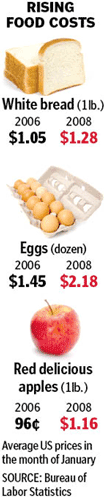
Lately the cost of food has increased dramatically. Let’s take a look at some common examples
Just last week I stood in the grocery store, making some choices about what to put in, based on price. The items in question were:
Good Earth tea ($3.99/box of 18 bags
Beef (grass fed, $5.99/lb)
Avocados ($1.25/each)
Brown Rice Tortillas ($3.50/pack)
There were a few others, but these stood out in my mind. I felt these items were rather expensive for what I could get from them, when considering volume and serving size. I aim to spend $100/week on groceries for my husband and I to eat together. We eat out approximately 1x/week WHEN WE HAVE THE FOOD WE LIKE IN THE HOUSE! When we don’t have easy to prepare, wholesome and tasty food, we eat out. A typical eating out experiences is $10-$15/person, depending upon where we go. If I purchase a hot tea away from home, it is minimum $1.50 per serving whereas my Good Earth tea was only about $.25/tea bag.
Therefore, my question became clear: Would purchasing the whole food based items at the grocery, for more $$ per item than in the past, save me money at the end of the week based on frequency of eating out, etc.
Yes, yes, yes!!!! Despite the fact that groceries are more expensive than before, if we can limit out dining out by even once per week, we are still saving money. Even purchasing all those items on the list, which yield more than 1 serving, would save over 1 meal out. Factor in the nutritional benefits of eating in, and its a slam dunk deal.
Now, I do believe we need to have some fortitude during these economic times. It makes sense to use the grocery $$ we have sensible. It also means schlepping home when my tired body wants to simply find a cozy spot to sit and have somebody else make the meal.
Here’s what I’ve come up with for ideas on how to save some $$ at the store and still eat well, the off-white way.
Puchase whole fryer chickens and carve them yourself. You can get nitrate-free lunchmeats this way too!
Purchase only what you will eat that week in fruits/veggies. Uneaten produce that goes bad is simply a was to $$. If you can only cook 2-3x in week, it doesn’t make sense to buy elaborate veggies that would need to be used everday.
Bring groceries to work as a way to avoid buying snacks or eating out at work. Baby carrots, bags of spinach, a bottle of salad dressing, a supply of teas and beverages…all ways to make eating well convenient and cheap.
Buy raw ingredients and make your own…whatever. Instead of pre-made trail mixes (spendy and full of sugar), buy bulk items and make your own. Use whole oats instead of quick and buy them in the bulk section. No need to pay Mr. Quaker for his fancy can. You can even find agave nectar, flax meal, most grains/rices, and dried fruits in bulk these days.
Buy enough for at least 4-5 days so you don’t go to the store daily. This is a total waste of time, gas, money and energy.
Make your own soups, deli salads and pasta dishes for work. Spending $7 on ingredients for a nice home-made dish that you can eat for 3 days will save $$, as these things typically run $3-7/lb at the deli or grocery.
make your own cookies, breads, etc. Don’t give Starbuck’s $2 for a muffin you can make for $.50 that has better nutrition. Bob’s Redmill flax meal has an awesome recipe.
Buy a water filter and stop buying water bottles.
The more packaging, the more it costs. Buy in large quantity and make up your own mini-bags of ‘whatever’. The whole snackpack thing is a gimmick – you can do it at home.
Purchase yogurts, applesauce, cottage cheese, etc in larger containers and take a smaller container with you to work each day. Reuse the smaller container
Give the generics another chance. Some generic stuff actually has better nutrition than the “fancy” stuff. Example: WinCo’s Cascade Pride english muffins. They cost $1 less than Thomas and have no HFCS, more fiber, and I hear they taste pretty good.
Okay folks, off to bed for me. I like this topic, but I need some sleep :0
Wishing you all an off-white day tomorrow!
PS: The cost of corn, wheat, and sugar are also on the rise – even better reason to stop eating these things!
When I awoke this morning I had an amazing sensation: the feeling of gratitude and love for my body and being…what a concept! I can certainly say that a major reason why I can connect with these feelings is because I am continuing to create distance between me and those toxic foods that skew my mind (the white stuff).
I actually enjoyed breakfast so much that I took a little picture. This sort of creativity is always a sign in me that I am healing, feeling good, and going with the “flow” of life.
This pic also denotes something more left-brained than just a reflection of self love thru food: it represents 1 standard serving of Almonds. For me, part of self-care is staying conscious of how much of a food I am eating, even if it is healthy.
Just 2 days ago I was chatting with a gal who struggled with kidney stones due to too much protein. She had switched to a ‘healthy’ diet, which included 2 CUPS of nuts, day….yowza…..and got kidney stones as a result. Perfect example of good intentions gone awry or the law of diminishing return.
Slowly my stubborn mind is seeing the grace and benefit of being moderate, gentle and peaceful in my approach. How nice to have space left in my belly after a meal because I’m not as attached to eating the fullest servings I can. There is much power in declining the need for “more”.
So much of what I see happens in myself and others when our body-minds are skewed with junk food is the inability to listen to the subtleties of life and our physical/emotional/spiritual needs. The white stuff puts the sensory system on over-drive and whammy! All intuitive responses are gone….at least for me because I have a serious inability to handle the white stuff. Its all or nothing, so I’ll choose nothing – there is more freedom in every other aspect of my life without it 🙂
Oh, for those who are curious, here is what I did with the almonds:
Cook oats on med heat. Half-way through add the fruit, vanilla and cinnamon. When fully cooked, add the nuts (I like the crunch of keeping the nuts raw). This meal packs about 15g protein, 8-10 g of fiber, 15g of fat and approx 25 g of carbs…and about 320 kcal. A great way to to add a little TLC to your morning. Can’t do gluten? NO problem: use Bob Red Mill’s Gluten free cereal or rice cereal instead. Can’t do nuts? No problem. Bob’s flaxmeal adds the fat/fiber of the nuts, and a little pat of butter would do the same.
Lately I’ve been taking my BMW for a spin more than I should. What I’m talking about is the BMW in my brain: the Bitching, Moaning, and Whining. Yes, it is the ultimate driving machine – of my neurosis!
Seems like I’ve been living in the problem a bit, and not in the solution…and what happens when I’m there: I get caught up into the desire to eat sugar, forget my responsibilities and become self-centered.
There is a reason I haven’t posted much in the past week – I’ve simply been self consumed. LIving an Off-White life is all about personal accountability, responsibility, and balance. Well, this week I none of the above. I also saw a correlation between my attitude, my stress and my lack of self-care. I ate too quickly, I did not give myself the simple pleasure of sitting at the table for dinner. I did not connect with friends as much. yada, yada, yada…..you get the idea.
What is it about the BMW’s of our minds that make the simple principles of self-care, especially with nutrition, so difficult. Is it that I don’t feel worthy of good choices? Is it because I see all the people in the TV and magazine Ads having so much fun with their junk food that I want to join in? Is it simply that stress really does drive the need to just simple carbs, go into a food coma, and forget life.
I suppose the answer can be all three. For me, the reason behind all the BMW moments was based in a fear of uncertainty. I thrive on stability and control. I like when things are the same, yet they never are. So much is evolving in my life: career, residence, the role my husband plays in our life (grad student), financial insecurity…..it goes on and on.
Can anybody else relate? I’m so interested in this human phenomenoa of wanting to neglect self in order to buy into fears and stress. Yes, I get it that fears/stress are valid, but it never feels better to give them all my power.
My hope is that I’ve done the footwork, prayer, and surrender over these issues, at least for now, and can get back to what I do love : blogging, connecting with friends, making healthy meals and being creative with food, and trusting that this evolution is absolutely perfect in its awkwardness. Isn’t everything beautiful at one point awkward (I think of flowers opening for the first time, baby chicks with ugly patchwork down feathers, storm clouds that you can’t tell if rain is coming or not). My biggest lesson to realize is that I am, and always will be, perfectly imperfect, and no amount of fantasizing about mile-high cheesecakes or donuts is going to change that truth. For me, or for anybody else.
So, here are a few steps I’ve taken to get my mojo back;
1. Spend time with a friend on Sunday afternoon
2. Make some time for my husband on Sunday night after his trip out of town
3. Eat simply for 3 days: focus on 3 meals/day with the emphasis of these meals being fruits/veggies, and a lean protien. No grains, and get off the dairy again.
4. Write in my journal
5. Post here, and be honest with myself and others about me
6. Look at websites of people I admire – ever reminding me to stay connected to my dreams and realize that nobody wakes up in one day with it all put together
7. Turn OFF THE TV – it is so demoralizing and food-tempting for me.
8. Go for a walk instead of a run on Saturday – gave myself permission to be in “flow” instead of force.
Yet another reason I’m not a fan of Splenda…….corn.
What, you ask, do corn and Splenda have in common? If you take a look at the back of a Splenda packet, you’ll find a very imporant word: Dextrose.
Dextrose is a sugar derived from corn. The same plants that gives us high fructose corn syrup also produce dextrose. Now, dextrose can also be derived from other things, like grapes, but much of the dextrose we eat comes from corn.
Why all the hype about corn? What gives? Corn continues to be a hot button because we are over-using it; the typical American approach: Something has a good aspect to it, so we exploit it and over-work it, and then wonder what went wrong. Our food (including dairy, meats, legumes, grains, etc) is at least 25% corn-based, from the reading I did in both “Omnivores Dilemma” and “Fast Food Nation” recently. The reason is that many of our lifestock eat corn, so we get the residual issues in our bodies.
Corn sensitivity, like gluten or dairy sensitivity, is on the rise. Of course it is – when we over-consume something, our bodies get sensitive to it. It’s like being poked in the same spot on your arm 1,000 times. Sure, a poke every now and again isn’t so bad, but constant poking yields a bruise, dysfunction on the skin and sensory feedback and general irritation. Same with food. We over-eat something ,especially if that something is genetically modified (and you can be your bottom dollar Corn is genetically modified, especially nowadays).
The other reason artificial sweeteners don’t excite me is that they miss the point: we are addicted to sweet. Wouldn’t you (who are also fellow addicts like me) agree that once you get the taste for sweet, it’s over?
Americans consume a lot of sugar, we all know that
What I think is under-represented is the genetic and biochemical drive to consume that sugar even when we know it is not good for us. What would serve us better are foods/recipes/mindsets that help us put our sweet craving aside.
In Chinese medicine it is said that a sweet addiction is an addiction to “the sweetness of life”. We want it to taste like honey all the time, and when it doesn’t, we go looking for the honey.
I can certainly see this in myself. I’ve used sugar as a compadre to cope with the drama in my head for many years. Without it, life still seems a little sour, and yet with it I am a slave to its effects.
I suppose the call to action here is to invite myself and others to look at the role sweet foods play and ask ourselves if that role is really suiting our life’s dreams? And for the times when something sweet would be really appropriatae, why not make something real, good and of the earth?
For such an occasion, I have a recipe. Maybe its weird to post a dessert recipe here, because I’m talking about abstaining from sugar, so this one is for the birthday party, the 4th of July picnic, or whatever else is a call to celebrate.
I have to thank Better Homes and Garden’s for the inspiration. I was looking for a recipe for a birthday potluck at work and my new mag came to the door, offering a recipe that catapulted me into creative recipe creating mode.
Blueberry-lemon-coconut-pie (and low sugar too!)
1/2 cup virgin coconut oil
3/4 cup whole oats (you can blend them for 30 seconds for a finer flavor, if you’d like)
1/2 cup spelt flour
1/2 cup unsweetened coconut
2 tsp cinnamon and nutmeg, each
1/2 cup flaxmeal
1/4 cup sucanat
In a small saucepan, heat coconut oil over medium heat until melted and warmed (1-2 minutes). In a med bowl, stir oats, flour, coconut, flax, spices, and sugar. Stir in butter and mix. Press into the bottom of a 10″ pie dish, or 13″x9″ pie dish. Bake at 350 for 10 minutes.
Filling:
6 eggs (or 3 eggs + 4 whites)
1/2 cup spelt flour
1/2 cup fresh lemon juice
3/4 tsp baking powder
1/4 tsp nutmeg
1 tsp lime peel
2 cups blueberries (I warmed 2 cups of blueberries on the stove w/1 packet Stevia to bring out flavor prior to adding)
1/4 cup sucanat.
In a medium bowl combine eggs, sugar, 1/2 cup spelt flour, lemon juice, baking powder and nutmeg. Beat for 2 min. Stir in lime peel and berries. Pour over crust. Bake 30 minutes at 350. Serve chilled after 2 hrs of refrigeration.
This one was a hit with all the co-workers, even those who don’t normally eat healthy.
I’m learning the power of having a well planned, special treat on occasion versus the daily consumption of “junk” sugar, which doesn’t actually make me feel good, and certainly doesn’t add anything to my health.
The average long haul truck driver leads a sedentary life and stops at travel centers 5 times each day. Their diet is heavy on snacks and all-you-can-eat buffets. It should come as no surprise that 73% of professional truck drivers are overweight or obese, more than twice the national percentage. Truck drivers may “celebrate the cost savings” but their bodies are clearly paying a greater price.
Yowza!! 5 times/day…….that is crazy. This topic reminded me of something I was recently reading in a Mayo Clinic newsletter. It was a discussion on the epidemic of obesity due to lack of physical activity. Truck drivers are certainly examples of a population who both move very little AND eat very calorie-dense foods.
So, I did a little research on something called NEAT:
you can check it out at this Mayo clinic link.
NEAT: NON-EXERCISE ACTIVITY THERMOGENESIS
Introduction Looking out over this crowded coffee bar, I see a 40-year-old man reading a newspaper. He is stationary. He sits next to a 30-year-old woman. She can barely sit still. She gets up and curves between the tightly squeezed tables, just to get a napkin and then gesticulates wildly as she talks on her cell phone. He has still not moved. He thinks now of his three-year-old daughter at home; “she just never stops” he thinks. He smiles to himself and scratches his nose. She gesticulates further as she tells a friend of a rat she saw scuttling rapidly on the subway rails. A taxi drives by. The driver immigrated from an agricultural community in the Ivory Coast. Birds soar high over-head. All these living beings exhibit spontaneous physical activity or, Non-exercise Activity Thermogenesis (NEAT).
Human Energy Expenditure (and semantics) Even lean individuals store at least two to three months of their energy needs in adipose tissue whereas obese persons can carry a year’s worth of their energy needs. It is the cumulative impact of energy imbalance over months and years that results in the development of obesity or undernutrition.
There are three principal components of human energy expenditure (EE), basal metabolic rate (BMR), thermic effect of food (TEF) and activity thermogenesis. There are also other small components of EE that may contribute to the whole, such as the energetic costs of medications and emotion.
BMR is the energy expended when an individual is laying at complete rest, in the morning, after sleep, in the postabsorptive state. In individuals with sedentary occupations BMR accounts for approximately 60 percent of total daily EE. Three-quarter’s of the variability in BMR is predicted by lean body mass within and across species. TEF is the increase in EE associated with the digestion, absorption, and storage of food and accounts for approximately 10-15 percent of total daily EE.
Activity Thermogenesis has two constituents, exercise-related activity thermogenesis and Non-exercise Activity Thermogenesis (NEAT). For the vast majority of dwellers in the U.S., exercise activity thermogenesis is negligible. NEAT, even in avid exercisers, is the predominant constituent of activity thermogenesis and is the EE associated with all the activities we undertake as vibrant, independent beings. NEAT has an enormous variety of constituents including occupation, leisure and fidgeting. Because of this, NEAT is challenging to study and its role in human energy balance has been difficult to define.
Non-exercise Activity Thermogenesis (NEAT) NEAT is likely to contribute substantially to the inter- and intra-personal variability in EE. Argue thus; if three-quarters of the variance of BMR is accounted for by variance in lean body mass and, TEF represents 10-15 percent of total EE, then the majority of the variance in total EE that occurs independent of body weight must be accounted for by NEAT. Evidence supports this. NEAT is highly variable and ranges from ~ 15 percent of total daily EE in very sedentary individuals to >50 percent in highly active persons . Even minor changes in physical activity throughout the day can increase daily EE by 20 percent. NEAT is impacted by environment, but is also under biological control .
NEAT and environment There are many environmental cues that impact NEAT. Broadly, they can be divided into occupational and non-occupational components.
NEAT and occupation
Matched individuals with highly active ambulatory jobs can have NEAT values of 1000 kcal/day greater than sedentary peers. In areas of nutritional need, this has implications for starvation-threatened individuals. In affluent countries, industrialized can convert high-NEAT jobs to lower-NEAT jobs and this has been associated with increased obesity rates.
Non-occupation NEAT
Dish washers
Cars
Remotes
Lawnmowers
Drive-through
Game-boy
Elevators
Snow blowers
Leisure-time sedentariness has resulted from the availability and volitional use of pervasive mechanization. When the energetic cost of non-work mechanization is estimated experimentally it approximates to, 100-200 kcal/day; a caloric deficit that potentially could account for the entire obesity epidemic.
NEAT and physiology With experimental overfeeding in humans, NEAT increases. Those who increased their NEAT the most with overfeeding gained the least fat. This suggests that along with self-evident societal slothfulness, NEAT is biologically modulated. Animal data support this. There appear to be central mediators of NEAT. For example, microinjections of orexins into hypothalamic nuclei increase NEAT whereas antagonists decrease it. There may be humoral mediators as experimental hyperthyroidism is associated with increased NEAT. There also be genetic mechanism at play; during overfeeding twinness in part predicts fat gain. Also NEAT is specific for different genetic strains of mice. Where to from here?
Mechanism: by understanding the neuromodulators and non-central mediators of NEAT; its biological function will become clear.
Physiology: What are the key components of NEAT? What is the role of NEAT in aging, children, gender, and race? How does positive and negative affect NEAT and its components?
Pathology: What is the role of NEAT in obesity and eating disorders?
Intervention: Targeted, evaluated interventions from person to population.
Having read this abstract, please get up and take and short walk down the corridor (or similar). Repeat for each abstract you read. Please let me know how it went.
They say you can’t go home again……and I think they are correct.
This weekend my husband and I went to Northern CA to check out his new grad school (UC Davis) and visit family. Food issues have always been a family affair for me. Dad was overweight and had a stroke in 1995 and mom shared my love of cake frosting and baked goods most of my childhood. I’d say to some degree we all had an eating disorder. Never was there left-over ice cream or desserts in my home, no matter how large a package was purchased. I simply thought it was normal.
So here I am, with my high maintenance diet, going home. I know where all the treats hide: chocolate chips in the outside freezer, homemade biscotti in the spare bedroom, ice cream in the kitchen and whatever was baked for the weekend’s bbq is probably resting in the laundryroom. Yes, I come from a long line of food hiders. Either because the family would eat all of the goodies, or because ants would find their way into the cupboards, food was always kept anywhere BUT the kitchen. There were stashes everywhere, which meant that I adopted a pattern of ‘sneaking’ from a young age.
For the most part I faired well. My mom tries to supply me with healthy options, but unfortunately her Splenda-baked lemon cheesecake just did not work out (no dairy and no Splenda for me). She also lovingly made a HUGE tray of lasagna for everybody to eat….well, except me, as I best not have dairy or white flour. Nothing like watching others eat homemade lasagna while you chomp down on a green salad with chicken to make you want to devour a whole tray by yourself.
So what did I end up doing…..”sneaking”, of course!!! I dipped my hand into the Ghirdhelli chocolate chips several times when I was near the outside freezer. I could feel the tension in my stomach and I did not enjoy them at all. “so this is what I was like growing up…”, I thought to myself. It was all about getting what I was NOT supposed to have.
The good side of ugly: compared with past visits, I did relatively well at staying away from the white stuff. I declined an offer for Starbuck’s drinks when everbody else was slurping down latte’s. I did not eat late at night when I arrived on Thursday evening, despite a growling stomach. Choices I make past 8pm are never in my favor. I even resisted the peanut butter, cheesecake, cheese and ice cream. I did have a homemade biscotti, and damn was it good!
Other off-white survival tips I use:
Start every day with warm lemon water. This helps keep the GI track a flowin’. Lemon water also kills a craving, especially if you add tons of lemon.
Distract myself when food becomes tempting and I’m not hungry. My 4-yr old nephew was a great distraction, and he was up for a little fun anytime.
Make a dish of my own for family picnics, etc. I chose quinoa date salad (recipe below) and tabouleh (from Near East).
Tell your family about your food limitations. I couldn’t be chowing on peanut butter because everybody knew that it wasn’t a great food choice for me. I was rigorously honest so I could keep myself healthy.
Become your own observer. I enjoyed watching myself get into ‘sneaky’ eating mode and seeing how I felt, thought and acted. It really was like Jr. High again. Consequently, Jr. High is when I started obsessing on sugar for the sake of control/rebellion/pleasure.
Quinoa date salad
Serves 4
3/4 cup quinoa, not soaked
1.5 cups water
2 tsp vanilla
2 tsp each: cinnamon, ginger, cloves
1/2 tsp salt
1/2 cup chopped almonds
3/4 cup chopped dates
Add quinoa and water to a medium saucepan. Bring to a rolling boil and then simmer covered until quinoa absorbs the liquid. Just after the boil add vanilla, salt, and spices. Chop the dates and almonds finely. Add to quinoa 2-3 minutes before cooking is complete. Serve warm or cold.
Today I stopped into a Pilot gas station/convenience store to fill up. I decided to take a mosey inside and see what was going on, as the place on I-5 Southbound in the Willamette Valley is always hoppin’. If you don’t know, Pilot “travel centers” offer gas, convenience stores, and usually a restaurant, such as Subway and Taco Bell in this instance.
Here is what I saw: When you walk in, one of the first things you see is a cooler with mixed green salads, sandwiches and dessert parfaits for 2/$5. Then its the coffee bar/soda bar, which takes up approximately 20-25% of the total store space. There is even a fruit stand where apples, oranges and bananas are 2/$1 – not too shabby.
However, its easy to miss these healthy options because 75% of the store is dedicated to utter garbage. Just look at the monthly specials for Pilot LLC, and you can clearly see the focus is on garbage eating. Most of the people in line with me either had candy bars + soda or the 2 chili-dog special, or a 44 oz soda. Most of the people were 20 – 200 lbs overweight. I felt like an oddball being regular sized.
But, let’s break it down a little. I know that junk food, especially “value priced” appeals to the traveller in need of a little grub and little time. But is it really that inexpensive?
For instance, the king sized candybars (Kit kat, Snickers, etc) were 2/$2. What do you get for that $2, when compared to the salad at $2.50/piece.
Calorically: $2 gets you the caloric value of 2 king-sized candy bars. There are 440 Kcal in the 1.94 oz, which equals (for two): 880 kcal for $2 and 4oz of “food”. That is 220 Kcal/oz of “food”, and 440 Kcal/$1 of “food”.
By contrast, the salad, I’d guestimate at about 100 Kcal without dressing, and 250 with dressing. The size is likely 6-8 oz, possibly more. Let’s say 7 oz/ to be moderate.
Therefore, you get 250 Kcal for $2.50, which is 100 Kcal/dollar. You also get only about 38 Kcal/oz of food.
To compare, the better financial “value” is in the candy bar, at 440 Kcal/$1, versus 100 Kcal/$1 with the salad.
Comparing cost per ounce yields a different result. The candy bar is $.50/oz, whereas, the salad is about $.38/oz, which is a better deal.
Let’s look at the health of it: Do we even need to do any math? The salad will yield much better health and in all likelyhood help keep you “fuller” longer because it is real food being digested by your organs, versus sugary junk food that sends a message to your brain for more, more, more!
Yet, in the line I saw, not one person had a salad, despite the better deal in both the health and the cost per oz perspective. We are all trying to save money and improve our health, right? So why do candy bars and chili dogs win out?
Maybe this will help clear things up: Check out this monthly pilot ad: Notice a theme with what is on sale?
Because marketing shows us that “snickers really satisfies” and “gimme a break” from my hard day with a Kit Kat bar. Sexy models chow down and our subconscious mind can’t turn it off. We want a bite of what they are selling. We all feel like we deserve a ‘treat’ for simply living life. I totally fall prey to that. I’ll think about my hard day and how “good” I was, and suddenly I’m pulling up to those same convenience stores or to a cafe for my liquid pleasure: junky hot chocolate. No joking: one of the apects that keeps me coming back to the black juice is the cost value (ust $.89 – $.99 at a convenience store) and the fact that I can get more volume out of my sugary treat with a liquid than with a solid. I get 12-16 oz for the caloric “price” of a regular sized candy bar (esp since I cut the hot chocolate with decaf coffee or water to cut down on sugar). But somewhere in my subconscious mind the trick that working hard = needing sugar certainly stuck. For me its hot chocolate, maybe for you its chips or nachos or soda, or whatever. Notice that fruits and veggies do not have a marketing campaign? The “5 a day” campaign to eat more fruits/veggies has a budget of 5 million/year nationally, whereas the pepsi corporation alone spends $2 billion/year on marketing……gee, I wonder why we pass up the fruit stand at Pilot and head for the soda fountain. And did you check out the specials this month at Pilot? Buy a gigantic soda and get a Kit kat for only $.24…..what a deal, that is added value – even though to our body less is better. We seem to shop and eat from our pocketbook over our stomach and digestion. More food for less simply = unhealthy people, the body does not celebrate the cost savings like the mind does.
Here’s my suggestion when you travel: pack your own snacks/lunch or find a grocery store with a deli and produce section when you are passing through a town. The food is fresher, cheaper, and offers more variety than a gas station anyway. Seriously, if we want for change on a cultural level, we must be willing to go the extra mile (literally, in this case) to get our health needs met and express them as a priority.
That’s what I think today…but maybe I’m just cranky – I am on day 6 of a liver/colon detox…. 🙂
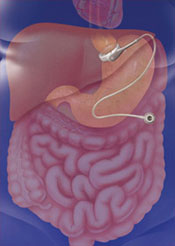
I realize this post may upset a few people, in particular those with Lapband. So, let me just say from the get-go that the reasons for my dislike have NOTHING to do with the the individuals getting the surgery. I have several clients/coworkers with Lapband – all of them wanting for a better life and better health.
I did a little lookey-loo on the Lapband website. Just as I thought, the “nutrition” information was completely inadequate and misleading. In my opinion, any weight loss program that requires you to have up to 6-weeks of liquid/baby-food consistency sustainence AND THEN suggest things like skim milk, sugar-free Popsicles and jello as “healing” is ridiculous and not in alignment with body wellness. This can really mess with a metabolism that is already stressed from years of yo-yo dieting, poor nutrition, stress, ill health, etc.
Whether the body is getting only 800 calories/day or more, if the calories are not quality, the body is going to be stressed. There were several aspects to the Lapband diet which reflect that very conventional thinking that goes with the medical model promoting this surgery . Its all about calories, calories, calories. I have read a few Lapband blogs and see individuals struggling with calorie counting, watching the scale, and wondering when the changes will occur.
When will we wake up and realize that the issue is both emotional/cultural and nutritional. Why not educate people about the importance of healing the body with nourishing soups, no processed foods, and emotional healing post- surgery. Even beyond just giving facts, coaching people and supporting a co-creative effort between those who need support and those who can offer it should be standard with any weight loss program. I feel like the scheme of Lapband is aimed at filling a need/void from individuals who feel desperate and scared about their ability to lose weight. There is not enough support or good information. Its misleading. Howe can margerine (which is mentioned on the dietary recommendations post-Lapband) be a part of a new nutrition plan? Margerine kills people, or at least hampers their health.
I get it that the need is for weight loss, and that comes with certain lifestyle changes, the first of which should be a switch to whole foods, nutritions foods, and nothing more. That is the way. Diet soda, jello and sugar-free foods will not yield long-term success any more than high-calorie junk foods because THEY ARE JUNK FOOD. I was glad to see some language around eating quality foods for the nutrition, but the other contradictions were just too blatant.
I also wonder about the emotional/cultural issues that those seeking Lapband will still have to face. What is going to make that person refrain from going to the food when they are stressed, bored, scared or whatever. Its not like that surgery, or any other, fixes the emotional issues. Is there support for that built into the Lapband promise? I did not see anything of the sort, but I could be wrong.
If anybody out there has had Lapband and wants to comment I’d love to hear from you. I just get so mad because the underlying issues around food are not going to be solved with Lapband, as they go deeper than any surgery and have so much to do with our culture and individual relationship with food.
I can’t believe how long it’s been since I posted. Clearly a sign of being just too busy and not balanced…and what do ya know: my desire for sugar has been higher the past week than in a while.
Stress is an odd little monkey in my body . While the real solution to excessive stress is relaxation, deep breathing, fun, peace….yada yada yada……my body-mind seek things that keep the perpetual wheel of anxiety going: more activity, more stimulation…and more sugar.
Life is so clever. It never ceases to amaze me how I’m always being brought little lessons that remind me to pay attention and keep doing my personal growth work. Just as I decided to blog about sugar and stress, more of “that” kind of stuff pops up in my life. We teach what we need to know, don’t we?
This week really wasn’t too bad, however. I did dive in a bit and add sugar to my hot chocolate (a rarity, usually I use stevia) and I did have some frosting on Friday. Yes, I said frosting…not cake with frosting, just frosting. A birthday celebration at lunch yielded left-over cake with white frosting AND sprinkles. Hello!!! By Friday afternoon, running off of 5 hrs of sleep for several nights, I just gave in. Thank GOD there was only a small amount of cake left. I can’t say for sure what state of affairs my ability to say “no” would have been in had I been staring down 1/2 a cake and nobody in sight to see me take a monster piece.
Some of you readers might still wonder why I am even mentioning what may seem like “small” amounts of sugar. I’m an addict. A sugar addict. There are no small infractions, no small treats. Each tiny morsel stimulates in me a desire for more that sometimes feels larger than life. I will blow off social engagements, isolate from my husband, buy crappy junk food that I don’t even like…all to feed this unsaitable craving. That is, if I’m not mindful, grounded and have done the self-care to stop this from happening.
What is the physiology of this crazy addiction? Am I alone? No way – I see sugar/carb addiction everyday of my life. I see it in my clients who don’t understand why they are so able in many aspects of their lives, but have a complete weakness for some kind of refined food. I see it in our children, who would rather zone out with video games and suck down 4-6 sodas/day (the average # of sodas an American kid drinks, according to some), and who can’t concentrate at school. I see it at the grocery store when I watch people, who look tired and unwell, load the cart with frozen pizzas, boxed cereals, bread, crackers, and maybe 1-2 fruits or veggies. We are so close to it, we can’t even see it. It is both completely socially acceptable (c’mon…just have 1 dessert) and totally unacceptable (hatred of obesity) to be a carb junkie today. American consume about over 120 pounds of sugar. What to know more about that? Check out this article by Nutritionist Dr. Nancy Applegate.
What does sugar do:
Step 1: Seek out some refined carb food and put it in your mouth. You feel stoked, happy, and can’t wait to taste the sweetness (even breads register as sweet in the body)
Cookies…mmmmm……..
Step 2: you chew that food item and your body starts to prepare for digestion of sweet. This is thanks to amylase, a mouth enzyme that breaks down sugar. Now, the design is clever: send a signal to the hypothalamus (in the brain), which signals the pancreas/stomach early so it can be prepared with some insulin. After all, these whole grains/fruits our body has been eating for thousands of years take time to break down, so amylase helps get the ball rolling.
Problem: refined sugar needs no breaking down. It is absorbed quickly in the blood stream. It hits hard, fast, and all at once.
Step 3: lots of insulin is produces once the signal of “sweet” is sent from the mouth (really its the brain experiencing the sensation of sweet) and when the sugar hits the blood stream.
Problem: Too much sugar at all once! Complex carbs break down slowly. Its like putting one box at a time on the conveyor belt. Remember the “I LOVE LUCY” episode from the YouTube video above? She couldn’t keep up, so she stuffed all the excess chocolates in her mouth/pockets, etc. It became an overload. It was stressful. Your body is Lucy when you feed it to much sugar.
Step 4: This excess sugar has to go somewhere. The liver takes some of it and stores it as glycogen. But it can only store 3-400 calories (about 100g of sugar max) at once. Over time, excess sugar consumption will stress the liver and engorge it, as it tries to force more storage of sugar while also trying to deal with all the other stuff it does. When it maxes out, it sends the sugar back into the blood stream as fatty acids. This is partly why excess sugar consumption raises triglycerides, perhaps more than fat consumption.
At the same time, this sugar now stimulates “fight or flight” response. Your adrenals start working. you get a little “high”. But it never lasts long, now does it? You can’t function as well b/c all the blood is being distributed to your periperhy. Your body is prepared to fend for its life. But there is nothing to fend for. You are sitting at your desk entering data into the computer,or watching TV, or anything else non-life threatening. Over time, the fight or flight activation stresses your body and makes you produce excess cortisol.
Also at this time, the hormone insulin swoops down and scoops up all that extra blood sugar so your brain can stay alive. Yay! Another day to live. However, that sugar ain’t coming out for free. Insulin converts sugar to fat. Lucky us- even if your meal was low in calories, if it was high is SUGAR it may go right to our rears. It took me a long time to believe this, until it started happening to me.
Problem: too much cortisol suppresses the immune system, so you get sick more easily . It also contributes to fat storage around the abdomen, in response to potential life-threatening stressors. It does not know the difference between stress caused by food and lifestyle and real, physically threatening stress.
Step 5: You crash. Your blood sugar dips too low and you get lethargic. Your pancreas is stressed b/c its having to play this insulin game all the time and its over it! It stops working well or your cells stop being as responsive.
Problem: Excess insulin production leads to weight gain (insulin stores sugar as fat in the hips, buttocks, abs, and thighs). The system poops out after a while too, which contributes to Type II diabetes, often associated with high-carb lifestyles. You also feel like garbage.
Step 6: The body is a system of habits and patterns. It comes to rely on certain processes, good or bad. After your crash and your “fight or flight”, you’ve now “up-regulated” certain processes in the body. They want to keep on working, so they now stimulate a new desire for more sugar. And the cycle continues.
Problem: some people are HIGHLY sensitive to this little phenomenon. In fact, for some people, sugar binds with other neurotransmitters in the body and moves into the brain to create “euphoria”. This high is similar to heroin. I’ve talked to ex-drug addicts who have told me kicking sugar was harder than kicking drugs. Some people (myself included) experience withdrawal when they get off sugar. Symptoms include:
headaches
dizziness, nausea
overwhelming urge for sugar. You think you “need it”
energy highs/lows
rapid heart beat
insomnia
constipation/diarrhea as the digestive system attempts to rebalance itself
change in appetite
anger, anxiety, irritability
thirst
skin breakouts
So you think your body needs sugar to live?
“Although the body does require sugar (glucose), as this is the only fuel the brain can use, it is important to remember the physiology of digestion. The properly functioning human organism can produce all the glucose the brain needs through the digestion of whole, natural, unprocessed foods” Dr. John Yudkin of Queens College, London, states “allhuman nutritional needs can be met in full without having to take a single spoonful of white or brown or raw sugar.”
All this just for some lousy sugar. And the high doesn’t even last. I also hate the feelings of guilt, tiredness, boredom, lethargy and low self-esteem that I get from too much sugar. It just isn’t worth it, for me.
I’m so thankful that others folks are starting to talk more freely about their carb addiction. Last night I came across an awesome book at Borders:
Okay, I’ve been blogging for way too long (these posts sure do take some time). I gotta get movin!
Have a happy, refined sugar-free day, if that’s your thing 🙂





 Off White Living
The average long haul truck driver leads a sedentary life and stops at travel centers 5 times each day. Their diet is heavy on snacks and all-you-can-eat buffets. It should come as no surprise that 73% of professional truck drivers are overweight or obese, more than twice the national percentage. Truck drivers may “celebrate the cost savings” but their bodies are clearly paying a greater price.