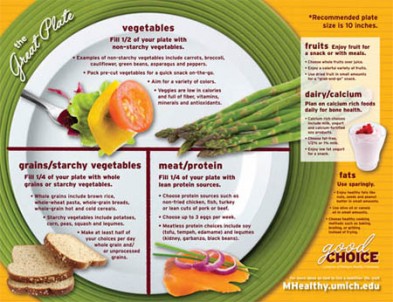
While prepping for my coaching session today I came across this handy-dandy picture that I think all of us could use as a reminder -especially right now when holiday treats are everywhere. I like this pic because it reminds me to eat in BALANCE. I tend to over-do it on one thing (carbs) and then want to restrict the next day to ‘make up for it’. Ha! When will I learn….
The more I eat in balance, the less I crave, and the better my digestion is. For me, this time of year is a great time to sub out breads and use root veggies, like sweet potatoes and also squashes as my ‘carb’. Gotta love that fiber.
Anyway bloggies, just a little reminder about balance on this sunny Tuesday in Davis. I couldn’t help but notice that nowhere on this plate is the “hot chocolate” portion..hmmm…..guess I’m in denial that a daily serving of Swiss Miss isn’t good nutrition. But hey, the box says it’s full of calcium and antioxidants, so how bad can it be 😉
Can you believe I did not even have pumpkin pie for Thanksgiving this year? That’s almost unheard of in my personal history. This year something was different…well, frankly, every year for the past few years there has been some kind of food or mindset change, so it’s not that surprising, really.
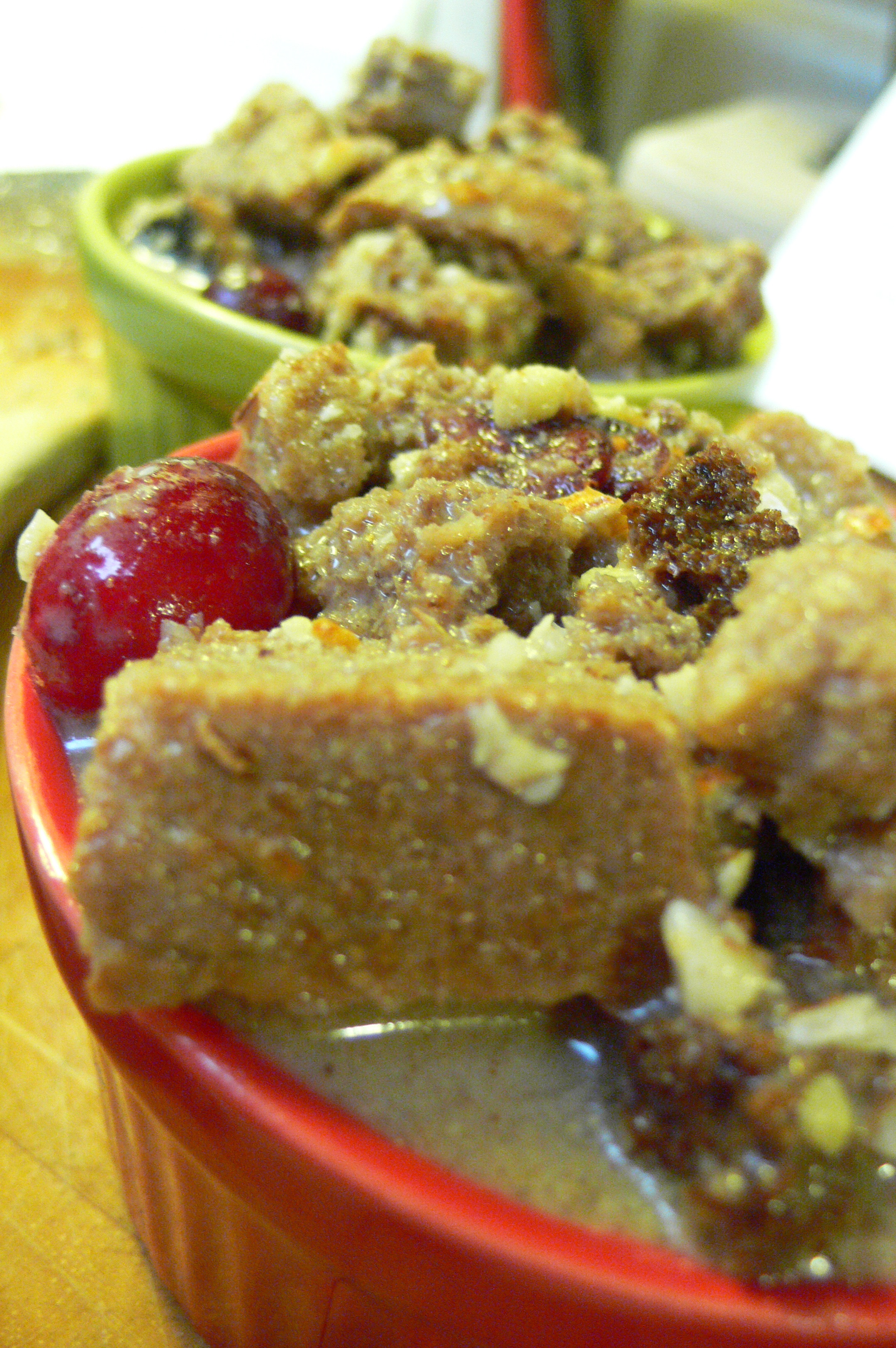
This year I actually wanted to choose foods that were delicious and made me feel better (physical and mental). Such was the mindset when I offered up to make a dessert: Vegan Bread Pudding. Yup, no cream, eggs, butter and very little sugar.
Buy boy, oh, boy, what a tasty treat. This high fiber meal ender will have your guests humming with delight…but maybe running to the bathroom. It’s err….packed with a LOT of fiber. Who doesn’t need more fiber, especially on a holiday! You could always use less whole grain bread, but what fun would that be!
VEGAN BREAD PUDDING
8 cups whole grain bread cubes (I used homemade bread, but you use whatever works), chopped into 1″ pieces
4 cups vanilla Almond milk, pref. unsweetened
1/2 cup dried cranberries (I went for T. Joe’s orange sweetened cranberries)
1/2 cup – 3/4 cup whole cranberries
1/2 cup agave, honey, turbinado or ‘brownish’ sugar
1/2 cup chopped almonds2 tsp cinnamon
1 tsp each: nutmeg, allspice, ginger
1 tbsp oil
Mix the nuts, cranberries, spices together in a LARGE bowl.
mixed berries, nuts and spices
Add the 8 cups of chopped bread and mix together.
8 cups of bread is a LOT of bread!!!
In the meantime add the oil to the almond milk. Add to the bread and mix. It won’t look pretty. Don’t worry. Set it aside for 15 minutes to ‘saturate’. Make sure all bread pieces have some moisture on them. While the pudding is setting you can clean the kitchen, call your mom, pay some bills, hug your kids (or your dog, or your husband, or whatever).
After 15 minutes, pour into either individual ramekins for baking, or a bread loaf pan, or whatever you want. Make sure the pan you use is greased/ buttered since there isn’t a lot of fat in this dish.
Cook at 350 for 25 (ramekins) to 45 minutes (bread loaf pan). Cook uncovered so the tops brown. Serve warm or cold, for dessert or breakfast, or both!
My next venture is to make this with pumpkin bread, which I just got from my in-laws!
sshh…don’t tell: I’m in my epidemiology class and while the lecture drones on I’m hunting down food blogs. You can tell where MY priorities are today….
anyway, this blog has good details on soaking grains and this is an essential for Off-White Living!
I am taking an environmental health class (SPH262 for those UC Davis folk reading). It’s pretty interesting, but what I am finding most interesting is the interface between the nutrition and the environment. It’s kind of a new realm of discovery for me. Think back: 100 years ago (yeah, I know YOU weren’t alive, but you can ponder human existence), environmental toxins were likely slim: maybe too much smoke because of long hours cooking over a wood-burning stove, or the reside from coal burning. But let’s face it: the air was cleaner, and the food was cleaner too (at least from toxins). However, of recent, with the huge surge in obesity and related diseases, scientists are hot on the trail for cause(s).
Environment and weight have been linked for a while, but mostly in the sense of our environment being “Obeseogenic” – meaning that it promotes a sedentary lifestyle, is infiltrated with junk food, and we are bombarded with messages to EAT! EAT! EAT! But I haven’t really looked into how toxins might play a role in weight issues or diseases that relate until I read this article.
Now, before I go into sharing what I’ve read, a few caveats: First, the research I’m reading is in animal studies. Yes, there are similarities with people, but let’s not assume a lab rat mimics a human exactly. Also, there are A LOT of factors that contribute to insulin resistance (which can result in diabetes, among other things). Diet, fitness level, muscle mass, stress level and genetics also play a role. Ultimately I believe it’s all of our responsibility to manage our own self-care to limit the influence of environmental factors in disease and obesity.
Okay, now the punchline: According to a 2010 study in Environmental Health Perspectives, Volume 118/Volume 4 (a reputable journal full of lots of science jargon), lab rats exposed to human levels of Persistant Organic Pollutants (POPS), developed insulin resistance compared with the unexposed (no POP) rats. The take-home is that we may want to think about the toxicants we ingest as a contributor to our diet. POPS are found in pesticides, among other places.
My suggestion is to do two things:
1. DON’T panic- this isn’t definitive research – more work needs to be done.
2. BE PROACTIVE AND SHOP CONSCIOUSLY: eat more local, pesticide free foods and consider alternatives to pesticides when you are tending to your own yards, etc. POPS are also ambient, especially in the San Joaquin Valley of CA, so I saw we all take regular breaks to the Mountains and the Ocean to get away from stifling valley air. IF you live in Oregon (my home away from this home…) – LUCKY!!!!! Clean air and lots of awareness about environmental pollutants.
Now it makes me wonder whether or not POPS contribute to food cravings…hmm……
This past Monday, in the name of science, I chomped on a sausage egg McMuffin with cheese for breakfast. Did I mention I got $20 and a free blood draw? Score! Hey, I’m a starving student…cut me some slack.
The whole experience got me thinking about why people go to Micky-D’s for B-fast anyway? The line was long when I arrived at 7:30 Am, and I’m sure some folk’s were getting more than $.99 coffee. So I decided to put my Off-White skills to the test and see whether I could improve on this drive-thru staple. Let’s see…
The challenger: Sausage Egg McMuffin
Ingredients: Muffin, egg, cheese, sausage, and probably some added sodium.
Nutrition facts:
45cal, 27g Sat fat, 42g total fat, 0g fiber, 285 mg cholesterol…all this for on sale for $1.50, but usually somewhere around $2 – yee-HAW.
My challenge: to do this at home for the same price and BETTER nutrition. Bring it on!
OFf-White version:
1 dozen cage-free, Omega 3- fat fortified eggs: $4, or $.33/egg
1 package of Sprouted 100% Whole Grain English muffins: $3.60, or $.60/muffin
1 oz of mozzarella cheese $6/lb = $.38
1 standard turkey sausage patty: $.50/each (based on what I find on the web)
Total: $1.86
Nutrition:
Estimated Calories: about 430
Total fat: about 21g
Total sat. fat: 9g
Total cholesterol: 215mg
Fiber: about 6 g
Other added benefits: omega-3 fats from eggs, an array of vitamins and minerals from the english muffin, and the satisfaction of knowing where your food comes from.
Am I lovin’ it…oh YEAH!!
Would love to hear what your McMakeovers for breakfast are!
If you are wanting to make some healthy lifestyle changes and want support, you are in luck. Support is on the way!
I am hosting an 8-week Group Wellness Coaching session starting FRIDAY, SEPT 17th. We will convene via phone (you’ll get the # when you sign up) and create achievable, motivating goals around issues of weight, healthy eating, increased exercise, and stress management.
The session will last 8 WEEKS and will occur every Friday 1:30-2:30pm. You will complete a thorough intake form upon sign-up so we can both know where you are coming from.
Group coaching takes all the benefits of personalized coaching and amplifies them, as you’ll learn from others and build positive relationships.
Recently I ventured back to my UC Davis roots and ate at the Dining Commons (yes, among freshmen!). Back in the day the food was decent, especially by dorm standards. However, now it’s off the charts great. There is a lot of cool emphasis on mindful eating, healthy options and they have a gluten-free and vegan section that would blow your mind! The old faves are still there, like pizza, but it’s not the emphasis. Check out my Post on Davis Life Magazine to read more.
creative menu options and nice presentation at the DC
tonight Matt and I ventured out to the Davis Dining Commons – the very same one I frequented as a college freshman oh so many years ago! Dang was it GOOD. I’m so impressed at how they integrate healthy options (quinoa burgers) and sustainability (Getting most of thier produce from the local campus growers). I wrote about it for Davis Life Magazine (Check me out on Monday in “mindful moments”!) but thought I’d share the post with you too, as it won’t be up for a couple of days on DLM.
This reminds me of how tasty the food was at Willamette Univ in Salem too. Apparently we weren’t the only ones who thought so because Rachel Ray even stopped by on her $40/day TV show back in the day. So maybe this will inspire you to seek out some uncommon dining options in your neck of the woods.
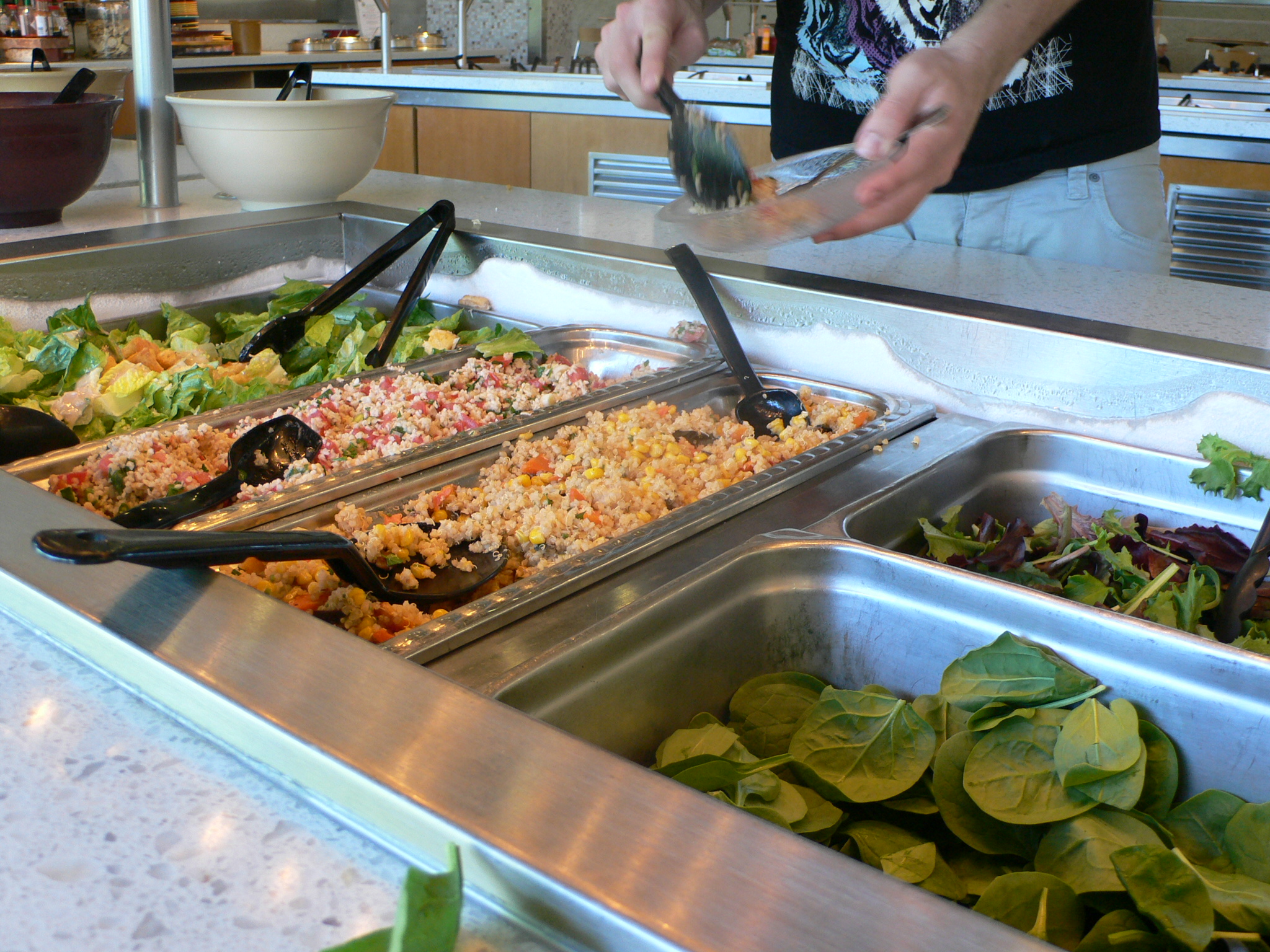
tabouleh salad and quinoa, oh my!
Pop quiz: Where in Davis can you get two freshly prepared dinners that include burgers on whole grain buns, customized salads, curried fish pasta, drinks and dessert of your choosing for $12 a person?
You scored an “A” if you said the Segundo Dining Commons on the UC Davis campus, and that is the very grade I’d give them too.
While dining there tonight (btw: I had the quinoa vegan burger, baked fries, salad and hot chocolate), I caught up with manager Mike Baldocchi to ask about the emphasis on health and sustainability at the DC. Simple strategies like switching to baked fries, reducing the oil usage, offering a huge salad bar with lean protein and local veggies, eliminating trays at each station (to avoid overloading the tray with food), and offering a Farmer’s Market meal every 2 weeks are just a few of the ways that the DC helps its patrons enjoy a healthy, mindful eating experience.
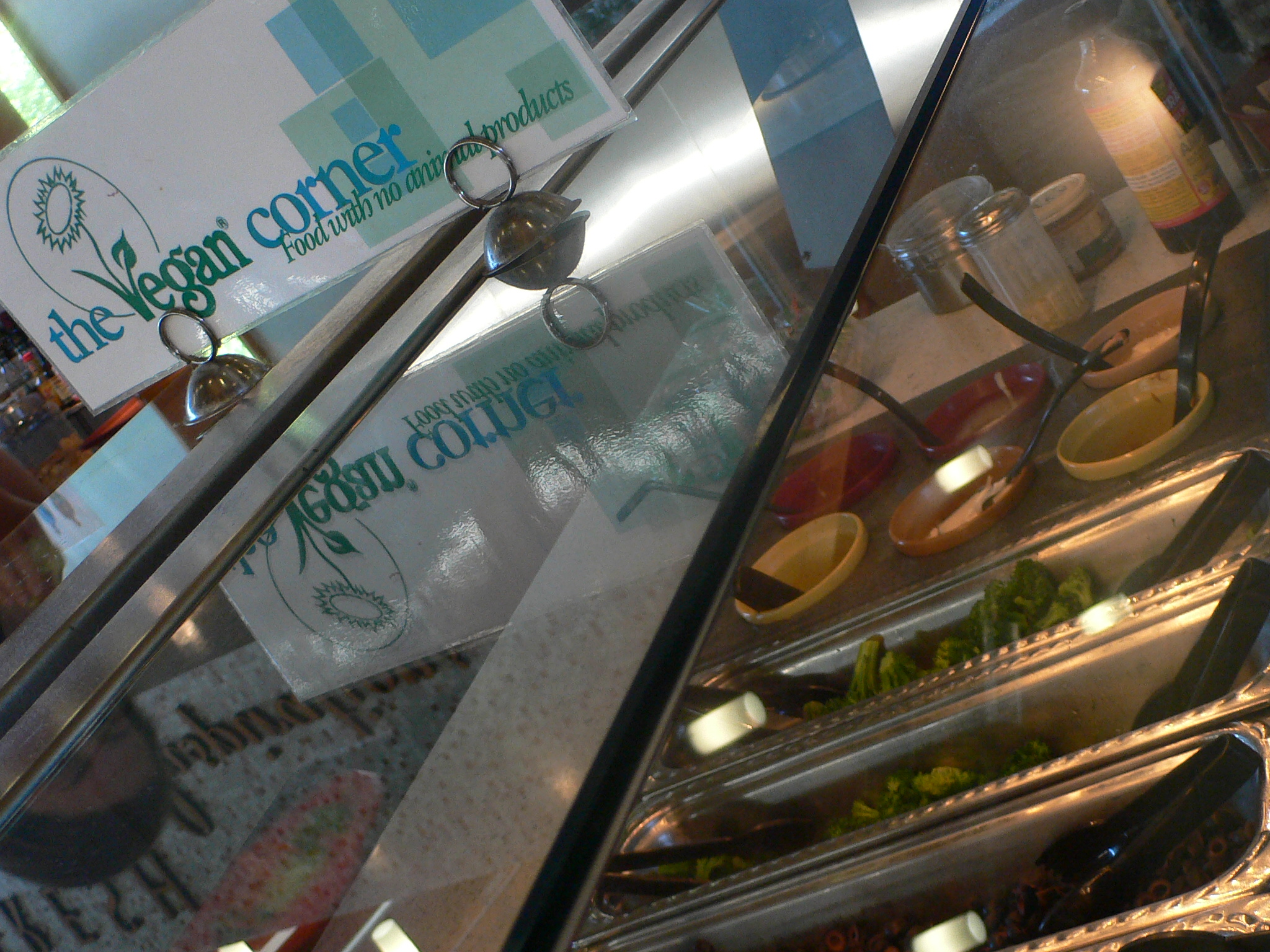
Most impressive were the Vegan food sections, Gluten free breads, creative dishes, such as Chicken Afritata and Tabouleh, and the colorful presentation. This is not your typical dorm food. Portions were perfectly sized (about 8 oz/plate) and you have to walk all the way to the back of the DC to grab a soda (time to question, do I really need that?).
I especially enjoyed loading up on fresh spinach, garbanzos, beets, chopped egg and turkey meat during my trip to the salad bar, and was delighted to see 8 oz coffee cups (as opposed to 12 oz or bigger!) when I treated myself to hot chocolate at the end of my meal. This place just screams balanced eating! To be sure, there are your typical DC treats – pizza, regular burgers, cakes and cookies, but it’s nicely mixed with other options. Even better, the DC get’s as much of their food as possible from local growers (even on campus) and they encourage patrons to be mindful of wasting food and napkins to support sustainability.
Oh, and most importantly the food is really good! Seriously. Go see for yourself!
I am prepping for my Grains class at the Davis Food Co-op on Wednesday, and I came across a handy-dandy website about cooking grains. I must be hungry because the recipes all looked fantastic too. My next adventure is going to be in toasting grains before cooking with them – an inspiration I just gained from the site.
Also, stay tuned because yesterday I made gluten-free crepes for the FIRST time and they were fabulous. Easy, light, and less carby than a pancake -love it! We ate them with sauteed asparagus, onion, and spinach….pics on the way 🙂
I often forget that not everybody loves kale. Strange, I know. What reminds me are random things like strange looks I get when I drink my kale-infused smoothie for breakfast at school, or when I see people’s eyes widen with confusion when I unearth my lunch and reveal the green leafy and onion sautee (over a bed of quinoa typically) leftover from the previous nights dinner. For me, this is just standard fare. How quickly I forget my anti-kale roots.
I get it. Upon first glance Kale looks uninviting. Almost angry. With its curly leaves and almost snarly looking appearance, it doesn’t exactly exude the a welcoming vibe. Not to mention that your only exposure may have been to the kale on the side of your “Eggs over my Hammy” plate at Denny’s or as the decorative green below fruit and cheese platters at dinner parties. That was certainly how I first knew kale.
But underneath all of that ruffage is a really tasty, nutritious and versatile veggie. But like all relationships, it simply takes time. My first adventure with kale was probably in 2005. I’d gotten the book Vegetarian Cooking for Everybody, by Deborah Madison and I was on a mission. Each week I chose a new veggie and accompanying recipe. Until that point I was a romaine lettuce and baby carrot girl, with the occasional salsa diversion. Now I can’t think of a veggie I don’t like. Even brussel sprouts. My grandmother is probably rolling over in her grave for that one!
Can I recall my first kale dish? No, but I bet it involved other flavors, as to hide the taste and texture. Turns out that kale, when cooked, is rather soft and pliable, not all all mean and offputting, as it looks in the grocery store.
Tip #2 for learning to love kale is to broaden your sense of what kale is. The hyper-curly variety is only one option. Dino kale is my fav – leaves are easier to work with (less curl) and it just has a nice, mild flavor. I also like red kale or a mix of several kales. Try putting them in minestrone soup, or veggie and chicken soup. I bet you won’t even notice your new friend, but your body will reap the benefits.
It’s not that you have to go nuts with kale like I do to have a healthy vegetable appetite. It’s simply that if you can make friends with kale, you’re probably in with most other veggies too, and that means lots of variety. I mean, who can eat romaine salads with fat free dressing and a few coarsely chopped baby carrots forever? I certainly couldn’t. My veggie repetiore needed a facelift. I’m glad I found kale. It’s a keeper in my diet.
PS: I don’t recommend eating it raw if its your first endeavor with dark leafy greens. It’s called ‘ruffage’ for a reason, people…get my drift??




 Off White Living