The Nourishent of an open Heart

This past weekend I had the honor and pleasure of attending a fabulous yoga retreat with Sybil Nance at Flying L Ranch near  Mt. Adams (somewhere near the bustling ranch community of Glendwood….more cows than people!!).

Its hard to describe the layers of experience of this cozy weekend.  Its much like a good lasagna or a great pot of soup: Hard to describe exactly what aspect of it makes the dish so incredibly fabulous, but the harmony of all flavors together create a synergy that can be felt on a level deeper than just the taste buds.

mmmm……my heart and my palate are humming  just thinking about it all.  My mom came with me, which was a huge gift.  Today when I was chatting with her about the experience she said that the good conversation and the laughter were her nourishment.  I just loved that.  Same for me too…..oh, and the amazing food: the food and the loving community were sweeter than my favorite dessert.

But since we are on the topic of off-white living, I shall recount to you how amazing and nourishing the food and the environment were, especially from an off-white perspective.  I am always gracious when in a  community that supports healthy eating and even all of my quirky food challenges.  In fact, there were others with me that ate just the same  – whoo hoo! 
It was really Sybil and the space that set the inital tone, as can be seen here by some of the friendly details of the cozy kitchen and Sybil\’s lovely breakfast provisions, which we were provided each morning before our 9 am yoga:


Mom and I enjoying a post-yoga meal:

I will leave you with one recipe – a simple black bean and avocado hummus I made to share in our communal meals.  It was a hit, so I suppose its worth a share:

2 cans organic black beans
1 large avocado
1/2 – 3/4 cup fresh cilantro
juice of 1/2 lime
1-2 cloves of garlic (make sure they get blended up!)
sea salt, to taste
1-2 tsp cumin

Mix all ingredients in a food processor.  You may need to add up to 1 tbsp EVOO to make a smoothe hummus.  Yields about 4-5 cups.  Serving size: 2 tbsp.

Namaste,

Rebecca

Revisiting vegetables in good company

goodies-for-raw-lasagna

Hi All,

last night “Off White Living” , in cahootz with my dear friend A., hosted a cooking class at our house entitled “Raising the Pasta Bar”.

It was a success, for both myself and A, and the guests.  As one guests put it: “it was fun to revisit vegetables in good company”………… 

In usual fashion, A. and I relished in the excitement of trying to put together a recipe portfolio for our guests that was creative, fun, and easy.  Here are a few pics from the evening to inspire those who could’t make it (BTW: the top picture is a mix of ingredients for a raw lasagana…YUMMMM)

matt-and-a


Matt and A. cooking and sharing info with the group


pesto-festo1

I will leave you with a recipe that was shared last night.  This one comes from A. and its a great way to get your greens and enjoy everybody’s favorite: PESTO!!!!  you can put this over any type of pasta, as well as use it as a dip, eat it with eggs, spread it on a sanwhich….endless possibilities!!

Pesto with Arugula and Spinach


1 large bunch of fresh basil

2 cups of arugula and spinach (or you favorite green)

3 cloves of garlic; more or less to your taste

¼ cup plus or minus of EVOO

One small handful of nuts (pine nuts, almonds or walnuts)

About a handful of grated parmesan cheese; to your taste

Sea salt and fresh ground black pepper to taste.


Chop all ingredients and add to a food processor. Mix well leaving a little chunky. Taste as you go to see if you need to add more or less of any ingredients. Chopping the ingredients prior to mixing will allow for a chunkier less paste like pesto with a bold flavor.


Use this pesto on veggies, quinoa, rice, or pasta. Enjoy.


the sweet truth about HFCS

I just about died today.  I’m happily watching a little TV on the Discovery Channel and I see this blasphemy:


OH MY GOD!!!!  Gee, I wonder who funded it ….oh, the corn growers association…hmm….big shocker.  Their big angle – “its just corn”……OH MY GOD x 2!!!!!!!  No, it is NOT just corn, and even if it WAS, the way its modified so much that it stresses the liver, increases blood sugar, and is more likely to contribute to carb addiction and the odd maladies that go with food sensitivities (headaches, constipation, bloating, inflammation).  It is NOT a food.  And just because it only has the same calories as regular does NOT MAKE IT OKAY!!!  This totally negates the notion that we really ought not to promote eating sugar.  Moderation will come when we focus on filling our diets with abundant wholesome foods.  Most of us don’t need to hear messages about eating sugar in moderation, as we get enough options to do so on a regular basis. 

The other part that baffles me is why this commercial landed itself on the Discovery Health channel.  What kinds of values does this channel embody if they allow such rubbish to be broadcasted.  How much money does it take to be willing to propagate a lie.  

My hope is that none of you Off-white readers will take this commercial seriously. Of course you won’t – you are all much too smart for that!! 🙂  Please tell your friends and family there is more to the story than these two lovely people sharing a popsicle in the park.  Its not innocent.  It’s deceptive. It’s wrong.  Now more than ever we need to continue educating through example and experience the benefits of eating real, wholesome foods.  Our children and our friends are looking to us to be models.  

Okay, off my soapbox!

Livin’ la vida Loca

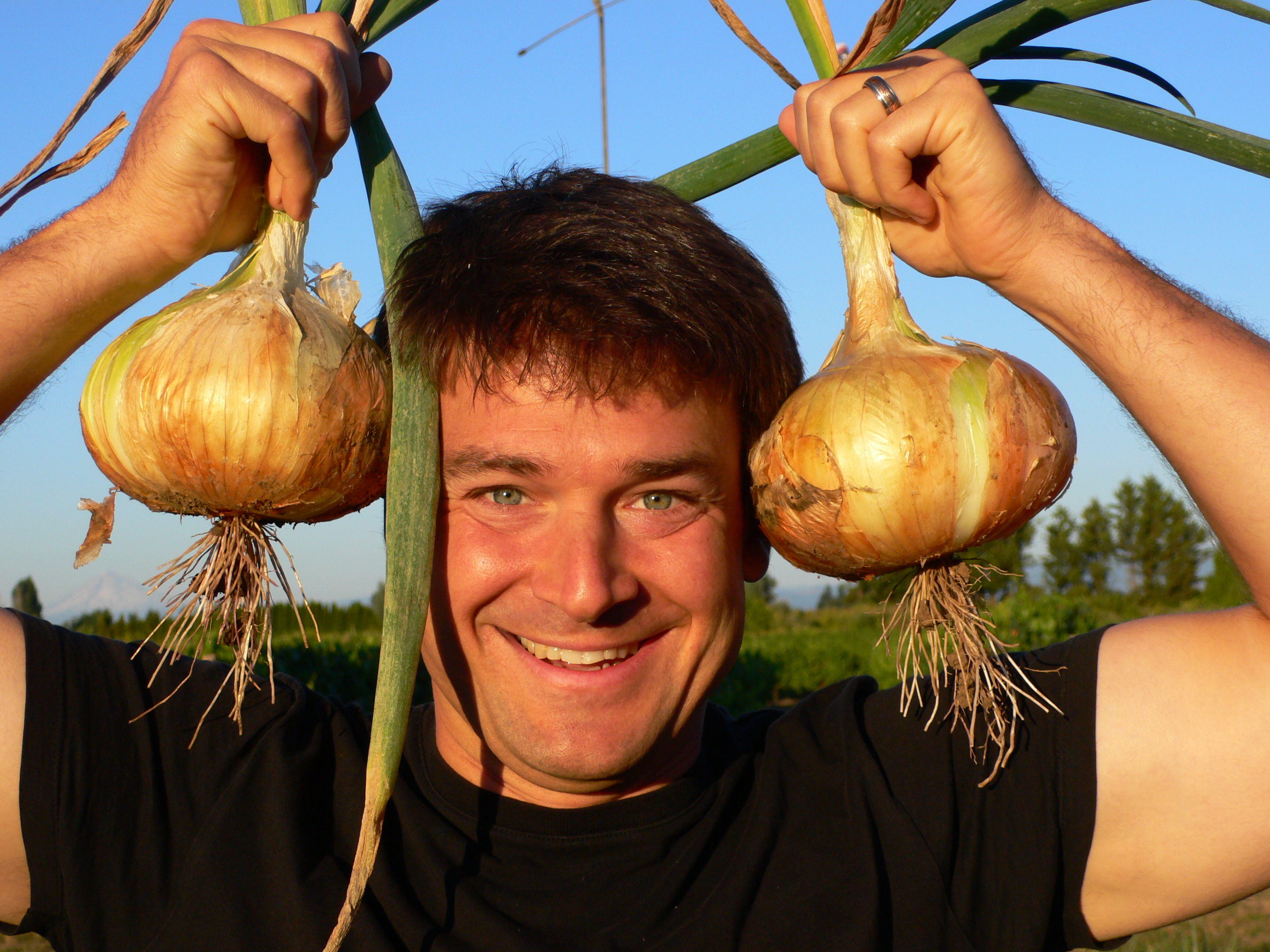
I feel so fortunate to live in the Pacific Northwest.  Just today I was chatting with my good friend, C. at her local hangout called Cooper’s in SE Portland.  Lucky for us, the owner – a seemingly happy and inspired man, stopped at our table for a quick chat about all things local, community-based, and fun.    I got to thinking about how cool a place like Portland and its surroundings are because the people simply live a life dedicated to supporting the ‘little guy’, and that ‘little guy’ then provides everything from awesome food and a place to hang on a Saturday afternoon, to 2.5 lb Walla Walla onions, as seen in this pic.

How blessed am I to live here and experience this?  The icing on this cake: most of what is yielded from these locally inspired people is truly authetic (see last post), and very much in alignment with Off-White living.

We’ve been taking advantage of the flavors of our local region all summer long, and here’s a short list of what I’ve had the prviledge of experiencing:

sautees Walla Walla onions
Elk burgers from local Elk
Sheep cheese
berries that make your eyes roll into the back of your head
Amazing stories about Russian immigrants having to flee to Iran for 22 yrs before coming to the NW
Dinner parties that last well into the 11th hour, complete with heirloom tomato salads and quinoa pilaf
Trips to Bob’s Red mill
Rose hip infused dark chocolates served with our bill at the Park Kitchen restaurant
Laughing with friends at the Portland Saturday market, where you purchase all the ingredients to make this:


Livin’ La Vida Loca Burger

1 lb local ground Elk meat
2 tbsp fresh rosemary and thyme
salt and pepper, to taste
1 large (and I mean large) Walla Walla onion from the farmer’s market
1 bunch of varied lettuces, from farmer’s markets or your friends garden
1 slice of Dave’s Killer spelt bread
1 fresh cucumber, from farmer’s market or your friends garden 

take the elk meat and mix with herbs/salt/pepper.  Divide into 4 patties, set aside. Slice the onion into 1/4″ rounds, set aside.  Heat the grill to med heat and add a little butter or olive oil to the area where the onions will grill.  Add onions and elk burger patties to the grill, cooking the patty mostly on one side first before flipping.  mix the onions regularly so they grill evenly.  Add salt or pepper as needed.

Toast the spelt bread and add the condiments for a burger, to your liking.  Once done, add the burger patties atop the toasted bread and finish off with grilled onions, a little lettuce and perhaps a slice of tomato.  Serve with a simple side salad of mixed greens + cucumbers…..enjoy!!

aaaahhhh,  it is the good life here, and  I am so very grateful. 
 

Authenticity: in food and in life

Okay, so this post is going to be a bit non-traditional, in that I’m not going to focus on the usual topics of recipes, food politics, and the like.  Recently I’ve been struck by a notion much deeper than that, yet it also relates to the concepts of Off White.

I want to talk about authenticity.  Its been a theme in my life lately, and I think there is a lesson in here for me somewhere.

Today at work, a very special person (we will call him J.) helped me see what is most important in my life, and that is being true to myself, my purpose, and from there living from a place of love.  No resistance, no emotional ‘junk food’ to toxify the soul.  Its much harder than it sounds, even though my experience tells me that being real, living in trust, and accepting what “is” sparks the fire of inspiration, synchronicity and peacefulness.

I can totally liken this to food too.  When I think about how our bodies respond to artificial, manipulated or contrived substances, like processed foods, or foods prepared without kindness or intention, the result is disease (in the long run) or discomfort.   My spirit is pretty much the same way.  Admittingly, I’ve been feeding my mind and my heart some junk food lately, because of fear and judgement.  And guess what…I feel totally sick and disassociated from my center.

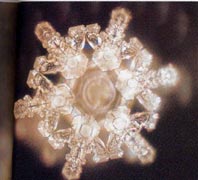
So then I got to thinking a little deeper, and the work of Dr. Emoto came  to mind.  He is the guy who did all the work with images of water that were exposed to different words, music, and experiences.  his work is profound.  
Our bodies are mostly water, as is everything we eat.  I got to thinking about my mindset lately when I sit down to a meal.  Have I eaten in peace or with anger?  Have I hurried to eat my food becuase I’ve been over consumed by some other task or thought?  Do I even stop to appreciate the fact that I can go to the grocery store and buy anything I want.  Anything.  And what do I choose?  

To give you an idea of what Dr. Emoto’s work respresents, check out these pictures, taken from his website.  They depict the difference between purity, nature, and kindness and unconscious actions or negativity.  
         

Water from the cleanest river in 
Japan

I love these pictures because they remind me that nature is always going to create something more profound, more authentic and hence more beautiful than what is man-made.  Nature’s gentle way yields perfection.  When I extrapolate that to my thoughts and actions, I can see how being in flow, listening to my body, and trusting the process will bring a wellbeing far more profound than when I  try and force it or artificially recreate it.  I simply must allow and listen to the innate guidance we all have inside of us.

The deeper aspects of living Off White invite each of us to listen to that inner wisdom and learn from nature.    I have been humbled and inspired lately by this concept, and my hope is that perhaps you will to.  
A place to begin?  How about gratitude.  Think of something to be grateful for when you sit down to a meal or when you purchase food at the market.  Thing of something you are thankful for when you wake up and when you go to bed.  Its amazing how such a simple concept can really alter your perception of life, and hence the choices you then make, for the better.

I am so grateful for this blog, and the voice you all have given me to express myself.  The internet can be a powerful tool for connection, when the intentions are right.

Thank you 🙂
Rebecca

Things I love: Be Three

There is a new online newsletter called Be Three.  Its for women, its clever, sassy, and the staff seems really cool based on their bios.  Check it out, and for those who just don’t get enough emails in their inbox every day, they even have a daily newsletter.

I don’t often address my yogini side in my posts (Try and focus on nutrition and sustainable wellness, but yoga is certainly a part of that!), but I loved this article, titled: Get your chant on:

Get Your Chant On

swaha.jpg

Last week, you found out that chanting isn’t just for saffron-robed monks, and that (heck yeah!) you’re willing to try it out for the sake of inner peace. Now, let’s turn our focus on ”what is a chant” and how easy it is to get your chant on.

What Is a Chant?
1. Words: One of the most popular spiritual words du jour is Om because of its intention to cultivate a sense of connection with those around you. And while many chants use Om as the main repetition, chants can range from this one-word mantra to a forty-verse ode to a brave monkey, like the Hanuman Chalisa.

2. Short and Sweet: Chants are often short and easy to remember, and, much like the songs you learned in grade school, are done in a call-and-response fashion (so that fading memory of yours doesn’t have to recall much at all).

3. Simplicity: All you need for chanting is your voice. No super-yoga flexibility, odd-shaped implements, or worldly-strength required.

4. Strength In Numbers: If singing in public ranks up there with public speaking on your top-fears list, worry not. While chanting, you’re singing with others – no solos required.

What to Chant?

Turn on one of these playlists – in your car, when you’re cleaning your apartment, or right before bed – and you’ll be on the fast track to zen.

Krishna Das: Check out this chant master’s CD collection of traditional chants, available for download on your iPod.

More on the price of convenience: a NEAT perspective

Recently a fellow blogger, named Jeff, wrote this:

  1. The average long haul truck driver leads a sedentary life and stops at travel centers 5 times each day. Their diet is heavy on snacks and all-you-can-eat buffets. It should come as no surprise that 73% of professional truck drivers are overweight or obese, more than twice the national percentage. Truck drivers may “celebrate the cost savings” but their bodies are clearly paying a greater price.

Yowza!!  5 times/day…….that is crazy.  This topic reminded me of something I was recently reading in a Mayo Clinic newsletter.  It was a discussion on the epidemic of obesity due to lack of physical activity.  Truck drivers are certainly examples of a population who both move very little AND eat very calorie-dense foods.

So, I did a little research on something called NEAT:
you can check it out at this Mayo clinic link.

NEAT: NON-EXERCISE ACTIVITY THERMOGENESIS

Introduction
Looking out over this crowded coffee bar, I see a 40-year-old man reading a newspaper. He is stationary. He sits next to a 30-year-old woman. She can barely sit still. She gets up and curves between the tightly squeezed tables, just to get a napkin and then gesticulates wildly as she talks on her cell phone. He has still not moved. He thinks now of his three-year-old daughter at home; “she just never stops” he thinks. He smiles to himself and scratches his nose. She gesticulates further as she tells a friend of a rat she saw scuttling rapidly on the subway rails. A taxi drives by. The driver immigrated from an agricultural community in the Ivory Coast. Birds soar high over-head. All these living beings exhibit spontaneous physical activity or, Non-exercise Activity Thermogenesis (NEAT).

Human Energy Expenditure (and semantics)
Even lean individuals store at least two to three months of their energy needs in adipose tissue whereas obese persons can carry a year’s worth of their energy needs. It is the cumulative impact of energy imbalance over months and years that results in the development of obesity or undernutrition.

There are three principal components of human energy expenditure (EE), basal metabolic rate (BMR), thermic effect of food (TEF) and activity thermogenesis. There are also other small components of EE that may contribute to the whole, such as the energetic costs of medications and emotion.

BMR is the energy expended when an individual is laying at complete rest, in the morning, after sleep, in the postabsorptive state. In individuals with sedentary occupations BMR accounts for approximately 60 percent of total daily EE. Three-quarter’s of the variability in BMR is predicted by lean body mass within and across species. TEF is the increase in EE associated with the digestion, absorption, and storage of food and accounts for approximately 10-15 percent of total daily EE.

Activity Thermogenesis has two constituents, exercise-related activity thermogenesis and Non-exercise Activity Thermogenesis (NEAT). For the vast majority of dwellers in the U.S., exercise activity thermogenesis is negligible. NEAT, even in avid exercisers, is the predominant constituent of activity thermogenesis and is the EE associated with all the activities we undertake as vibrant, independent beings. NEAT has an enormous variety of constituents including occupation, leisure and fidgeting. Because of this, NEAT is challenging to study and its role in human energy balance has been difficult to define.

Non-exercise Activity Thermogenesis (NEAT)
NEAT is likely to contribute substantially to the inter- and intra-personal variability in EE. Argue thus; if three-quarters of the variance of BMR is accounted for by variance in lean body mass and, TEF represents 10-15 percent of total EE, then the majority of the variance in total EE that occurs independent of body weight must be accounted for by NEAT. Evidence supports this. NEAT is highly variable and ranges from ~ 15 percent of total daily EE in very sedentary individuals to >50 percent in highly active persons . Even minor changes in physical activity throughout the day can increase daily EE by 20 percent. NEAT is impacted by environment, but is also under biological control .

NEAT and environment
There are many environmental cues that impact NEAT. Broadly, they can be divided into occupational and non-occupational components.

NEAT and occupation
Matched individuals with highly active ambulatory jobs can have NEAT values of 1000 kcal/day greater than sedentary peers. In areas of nutritional need, this has implications for starvation-threatened individuals. In affluent countries, industrialized can convert high-NEAT jobs to lower-NEAT jobs and this has been associated with increased obesity rates.

Non-occupation NEAT

  • Dish washers
  • Cars
  • Remotes
  • Lawnmowers
  • Drive-through
  • Game-boy
  • Elevators
  • Snow blowers

Leisure-time sedentariness has resulted from the availability and volitional use of pervasive mechanization. When the energetic cost of non-work mechanization is estimated experimentally it approximates to, 100-200 kcal/day; a caloric deficit that potentially could account for the entire obesity epidemic.


NEAT and physiology
With experimental overfeeding in humans, NEAT increases. Those who increased their NEAT the most with overfeeding gained the least fat. This suggests that along with self-evident societal slothfulness, NEAT is biologically modulated. Animal data support this. There appear to be central mediators of NEAT. For example, microinjections of orexins into hypothalamic nuclei increase NEAT whereas antagonists decrease it. There may be humoral mediators as experimental hyperthyroidism is associated with increased NEAT. There also be genetic mechanism at play; during overfeeding twinness in part predicts fat gain. Also NEAT is specific for different genetic strains of mice.
Where to from here?

Mechanism: by understanding the neuromodulators and non-central mediators of NEAT; its biological function will become clear.

Physiology: What are the key components of NEAT? What is the role of NEAT in aging, children, gender, and race? How does positive and negative affect NEAT and its components?

Pathology: What is the role of NEAT in obesity and eating disorders?

Intervention: Targeted, evaluated interventions from person to population.

Having read this abstract, please get up and take and short walk down the corridor (or similar). Repeat for each abstract you read. Please let me know how it went.

Nutrition:The price of convenience

Today I stopped into a Pilot gas station/convenience store to fill up. I decided to take a mosey inside and see what was going on, as the place on I-5 Southbound in the Willamette Valley is always hoppin’. If you don’t know, Pilot “travel centers” offer gas, convenience stores, and usually a restaurant, such as Subway and Taco Bell in this instance.

Here is what I saw: When you walk in, one of the first things you see is a cooler with mixed green salads, sandwiches and dessert parfaits for 2/$5. Then its the coffee bar/soda bar, which takes up approximately 20-25% of the total store space. There is even a fruit stand where apples, oranges and bananas are 2/$1 – not too shabby.

However, its easy to miss these healthy options because 75% of the store is dedicated to utter garbage. Just look at the monthly specials for Pilot LLC, and you can clearly see the focus is on garbage eating. Most of the people in line with me either had candy bars + soda or the 2 chili-dog special, or a 44 oz soda. Most of the people were 20 – 200 lbs overweight. I felt like an oddball being regular sized.

But, let’s break it down a little. I know that junk food, especially “value priced” appeals to the traveller in need of a little grub and little time. But is it really that inexpensive?
For instance, the king sized candybars (Kit kat, Snickers, etc) were 2/$2. What do you get for that $2, when compared to the salad at $2.50/piece.

Calorically: $2 gets you the caloric value of 2 king-sized candy bars. There are 440 Kcal in the 1.94 oz, which equals (for two): 880 kcal for $2 and 4oz of “food”. That is 220 Kcal/oz of “food”, and 440 Kcal/$1 of “food”.

By contrast, the salad, I’d guestimate at about 100 Kcal without dressing, and 250 with dressing. The size is likely 6-8 oz, possibly more. Let’s say 7 oz/ to be moderate.
Therefore, you get 250 Kcal for $2.50, which is 100 Kcal/dollar. You also get only about 38 Kcal/oz of food.
To compare, the better financial “value” is in the candy bar, at 440 Kcal/$1, versus 100 Kcal/$1 with the salad.

Comparing cost per ounce yields a different result. The candy bar is $.50/oz, whereas, the salad is about $.38/oz, which is a better deal.

Let’s look at the health of it: Do we even need to do any math? The salad will yield much better health and in all likelyhood help keep you “fuller” longer because it is real food being digested by your organs, versus sugary junk food that sends a message to your brain for more, more, more!

Yet, in the line I saw, not one person had a salad, despite the better deal in both the health and the cost per oz perspective. We are all trying to save money and improve our health, right? So why do candy bars and chili dogs win out?

Maybe this will help clear things up: Check out this monthly pilot ad: Notice a theme with what is on sale?

current_flyer

Because marketing shows us that “snickers really satisfies” and “gimme a break” from my hard day with a Kit Kat bar. Sexy models chow down and our subconscious mind can’t turn it off. We want a bite of what they are selling. We all feel like we deserve a ‘treat’ for simply living life. I totally fall prey to that. I’ll think about my hard day and how “good” I was, and suddenly I’m pulling up to those same convenience stores or to a cafe for my liquid pleasure: junky hot chocolate. No joking: one of the apects that keeps me coming back to the black juice is the cost value (ust $.89 – $.99 at a convenience store) and the fact that I can get more volume out of my sugary treat with a liquid than with a solid. I get 12-16 oz for the caloric “price” of a regular sized candy bar (esp since I cut the hot chocolate with decaf coffee or water to cut down on sugar). But somewhere in my subconscious mind the trick that working hard = needing sugar certainly stuck. For me its hot chocolate, maybe for you its chips or nachos or soda, or whatever. Notice that fruits and veggies do not have a marketing campaign? The “5 a day” campaign to eat more fruits/veggies has a budget of 5 million/year nationally, whereas the pepsi corporation alone spends $2 billion/year on marketing……gee, I wonder why we pass up the fruit stand at Pilot and head for the soda fountain. And did you check out the specials this month at Pilot? Buy a gigantic soda and get a Kit kat for only $.24…..what a deal, that is added value – even though to our body less is better. We seem to shop and eat from our pocketbook over our stomach and digestion. More food for less simply = unhealthy people, the body does not celebrate the cost savings like the mind does.

Here’s my suggestion when you travel: pack your own snacks/lunch or find a grocery store with a deli and produce section when you are passing through a town. The food is fresher, cheaper, and offers more variety than a gas station anyway. Seriously, if we want for change on a cultural level, we must be willing to go the extra mile (literally, in this case) to get our health needs met and express them as a priority.

That’s what I think today…but maybe I’m just cranky – I am on day 6 of a liver/colon detox…. 🙂

Is your diet sustainable?….is MY diet sustainable??

Def’n sustainability (per Wikipedia):
Sustainability is a characteristic of a process or state that can be maintained at a certain level indefinitely. The term, in its environmental usage, refers to the potential longevity of vital human ecological support systems

In recent years an academic and public discourse has led to this use of the word sustainability in reference to how long human ecological systems can be expected to be usefully productive…………

When I ride the bus into work, I like to take advantage of the time and do a little light reading.   I was getting into my favorite magazine, Body + Soul  (check it out!). Eco-friendly living and sustaniable “anything” is a big trend these days.  Its all over the cover and in just about every section of articles.    It got me to thinking:

We often focus on bringing Earth back into balance and that focus is usually outside of ourselves.  I ride the bus to help “save the environment”.  I recycle to “protect the Earth”, etc.   Sustainable products are all about using resources in a way that preserves them for the long haul and not just for my immediate gratification (like can I schlep a canvas lunch bag to work everyday, even w/its food stains, in place of a plastic bag which I just toss out).

However, what about looking at sustainability, based on the def’n above, in terms of nutrition.  Hmmmm, now here is some food for thought.  Is my diet sustainable?  If I did what I do regularly every day, could I exist in wellness when I’m 60?   how about you: Is what you are eating/not-eating/how you are eating it something you could keep up for the long term without demise or collapse?

If no, then it is not sustainable.  Maybe we’re missing the mark a bit by keeping the sustainability articles focusing on just landfills, water bottles and bamboo floors.

Let’s do a case study.  Let’s use me.

Say that every day I stop for a hot chocolate (my dirty little secret: I love the JUNK hot chocolate. I try and just drink it at home w/my recipe (1st post in recipes)   Let’s say I exercise regularly, have about 5 lbs to lose (put on during the last 5-7 yrs of living a 9-5 lifestyle and being moderately attached to my little sugar fix, as well as some MAJOR sugar benders  each day) , but no drastic health challenges. I’m currently 31 yrs old. Because I get a good dose of sugar/fat/possibly HFCS and possibly trans fats daily, these certainly add up with time.  Not to mention the hundred to several hundred calories of nothing I am consuming (nothing except pure enjoyment and inner peace, that is).

Could I do this indefinitely and still prosper? Probably not. I might be able to do it forever, but prosper I would not. Those 5# could easily double in a year, simply by eating 100 calories/day (esp of non-whole foods like hot chocolate and dairy-based foods). Over the next 40 yrs, that is another 20lbs. No good.

Then there is the long term effect of sugar.  Pretty much it is the anti-sustainability substance.  It’s like an oil spill in the ocean, or holes in the ozone. And who knows what 40 yrs of regularly ingesting chemicals (like the “natural flavors” found in packaged foods”) will do. And what about the crowding out of wholesome foods, more water, herbal tea, or other options that actually ad to health.   Sure, today nothing is wrong, but what about when I reach 65?  What about the desire for sweet that tends to perpetuate when I get my hands on a hot cup o’ cocoa.  where will  those leave me in 20 yrs?  Do I want to keep chipping away at my wellbeing over some crappy product made by Nestle?

So, again, ask yourself: is what you’re eating today going to sustain you tomorrow? If I was a rainforest, would the foods and habits I’m putting into my system yield maximum growth in the future? Would my eco-system flourish indefinitely? What am I eating, that when added up, could make a big impact on my health?

Maybe we need to direct a little attention to our own ecosystems and focus there while doing our part to keep our planet well. We are part of the Earth, anyway. What we do to ourselves (microcosm) is a reflection of what we do to nature (macrocosm).

This isn’t even about weight loss or gain or looking good . Those things come when we care for ourselves.  I find the focus on weight or size totally unispires me.  What really drives me to stay well is the feeling I get when my body/mind are nourished.  I didn’t even know what this felt like until I was willing to get past the sugar coma I placed myself in and try some real food.  Nature produces beauty when it has the natural, clean, resources to do so.  My body does the same thing and no calorie counting is required.   Remember what happened when you fed your plant Coca-cola for your 3rd grade science project? No good. Nope. Not sustainable in the least.

Ole – Mexico, here I come!!!

My husband, Matt and I are off, for a week in Mexico starting tomorrow.

Some interesting observations I have realized about myself while on vacation:

  • It is actually EASIER for me to make good food choices when I’m away than when at home, despite being limited to the situation I am in when traveling.
  • I tend to make WORSE foods choices the few days before I go. I liken this one to stress or the pressure I put on myself to “look good” on vacation. whenever I put any sort of physical appearance stress on myself, it usually backfires. I suppose I just don’t like pressure 🙂
  • I really savor the flavors of my food and my digestion is better. At home I have a nasty habit of eating while working, or eating while doing something else. This is no good because I don’t connect with my food. IF you want to know more about connecting with your food, check out the mindful eating document in the bottom box of this blog.

Here are a few tips/tricks I do use to help me enjoy my vacation instead of being hung up on food/body image:

  • BYOS: bring your own snacks. Ialways pack an arsenal of raw nuts, flax chips, gluten-free bars, and sometimes fresh fruit (though not this time – I think I’ll find PLENTY in Mexico)
  • Bring a water bottle for the plane. Those dang airlines are really chinsey with doling out the water, so I just bring my own. I also use this bottle when out and about. It saves $$ and I’m guaranteed to have my water.
  • Bring teas. I love good tea, and I’ll feel less deprived if I have what I want.
  • Taste local flavors: spices, veggies or meat dishes that are unique to the region. I can eat bread and stuff like that anywhere – I want the good stuff. So, for this trip, I want good salsas, guacamole, carnitas, fajitas, tropical veggies, etc….YUM!!!

So, that is it! I’ll be back in a week 🙂 If I can write from the beach while I’m away, I will!